A ceremony can be perfectly planned and still change in minutes. The sun may disappear behind a hillside, a beautiful terrace may be crowded at cocktail hour, or the route between the chapel and reception may take longer than expected. So, do wedding photographers scout venues? Often, yes. But a meaningful answer is more nuanced than a simple pre-wedding visit.
For destination celebrations especially, scouting is less about arriving with a rigid list of poses and more about understanding how a place feels, moves, and photographs. It gives your photographer the confidence to protect time for the moments that matter most, while leaving room for the honest, unplanned emotion that makes wedding photographs feel like your own.
Do Wedding Photographers Scout Venues for Every Wedding?
Not necessarily. A photographer may scout a venue in person before the wedding day, visit it on the morning of the celebration, or rely on deep familiarity built through previous work there. All three approaches can be effective when they are paired with thoughtful planning.
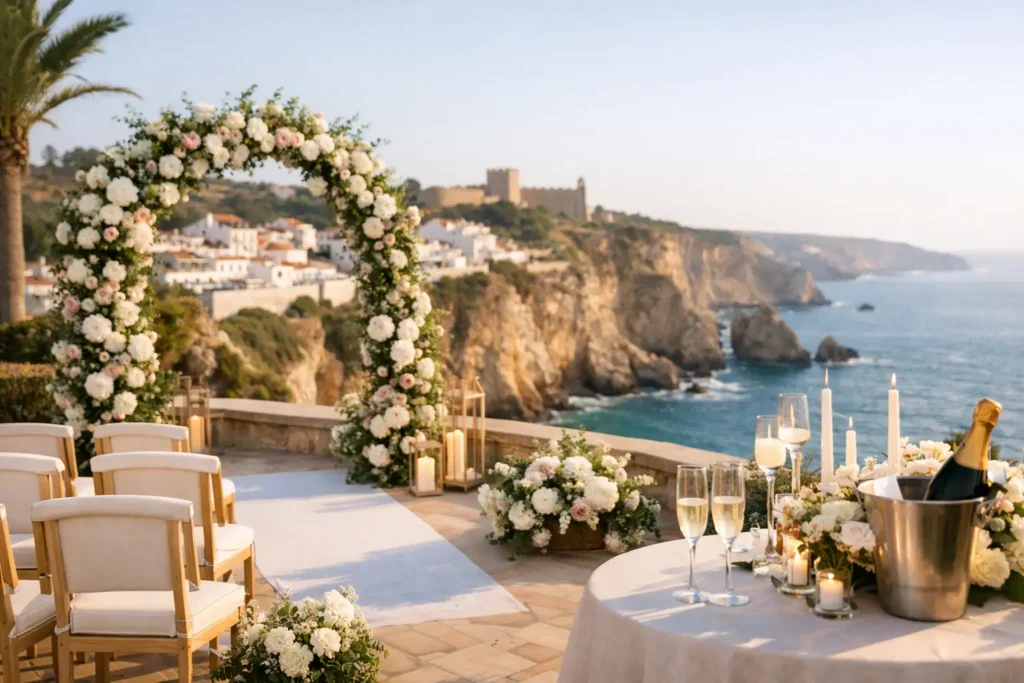
At a venue a photographer knows well, an additional scout can still be useful if the season, ceremony time, room layout, or weather plan has changed. A summer celebration in the Algarve has a completely different quality of light from a late-autumn wedding, even on the same property. Likewise, a new floral installation, a covered ceremony option, or a revised reception layout can change the best places and times to photograph.
For a venue that is new to the photographer, an advance visit is ideal when logistics allow. Yet destination weddings do not always make that possible. Couples should not assume that a photographer who has not physically visited a property before cannot create exceptional work. An experienced destination photographer knows how to assess light quickly, ask the right questions, build a flexible timeline, and make intelligent decisions once on site.
What a Venue Scout Actually Reveals
A scout is not simply a search for a dramatic view. Beautiful backdrops are valuable, but the practical details often make the greatest difference to your experience.
A photographer looks at where the light falls during each part of the day. They notice whether your getting-ready room has window light, whether the ceremony aisle faces harsh afternoon sun, and whether the dinner space will be warm, dark, candlelit, or mixed with colored lighting. These observations help shape photographs with flattering color and atmosphere, without repeatedly pulling you away from your guests.
They also study the flow of the venue. How far is the walk from your suite to the ceremony? Is there a quiet corner for a private first look? Can portraits happen close to the reception so you do not miss an hour of celebration? Is a cliff path safe in heels, or would it be better reserved for a relaxed post-wedding session? Good planning is often invisible on the day. You simply feel calm because someone has already considered the details.
A location scout also identifies practical limitations: restricted areas, permit requirements, guest access, parking, golf carts, stairs, noise rules, and the location of indoor alternatives. These are not the romantic parts of wedding planning, but they protect the romance from unnecessary stress.
Why Local Knowledge Matters as Much as a Visit
Portugal offers extraordinary variety within a relatively small country. Light reflects differently from the pale stone streets of Lisbon than it does from the river and vineyard slopes of the Douro Valley. Atlantic wind can transform a coastal ceremony. Historic estates may have enchanting courtyards that become very dark after sunset.
A photographer with local experience can anticipate these conditions before arriving at the venue. They understand when the sun is strongest, how quickly it sets in certain valleys, which months bring softer light, and when a popular location is likely to be busiest. That knowledge is particularly reassuring for couples organizing their wedding from the United States or elsewhere abroad.
This is why a scout should never be viewed as the only measure of preparation. A photographer can visit a venue once and still be caught unprepared if they do not understand the region, communicate with the planning team, or adapt to real conditions. Conversely, a skilled local professional may arrive at a new venue with a clear strategy because they have reviewed the schedule, studied the surroundings, spoken with the coordinator, and worked in comparable settings many times.
When an In-Person Scout Is Most Valuable
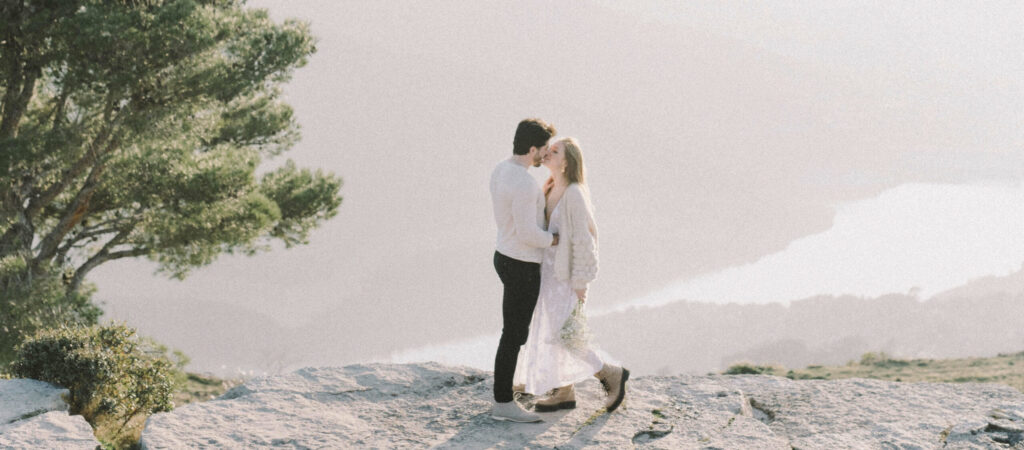
Some celebrations benefit especially from an advance visit. Large multi-day weddings, properties with several ceremony options, and venues with complex transport or access are strong candidates. So are places where portraits depend on a precise viewpoint, such as a cliffside ceremony, a remote vineyard, or a historic building with limited public access.
An in-person scout can also be worthwhile when your wedding has a very short photography window. If sunset portraits are the only time you will be alone together, knowing the nearest beautiful, quiet location in advance helps make those twenty minutes feel unhurried.
It is equally valuable when the weather backup is likely to be used. Rain plans deserve the same creative attention as outdoor plans. A photographer who has seen the indoor spaces can consider window light, architectural details, and how to create intimate images without making the day feel like a compromise.
Still, there is a trade-off. Sending a photographer to scout a distant venue may add travel time and expense, particularly when the wedding is outside their regular area. Before deciding, ask what preparation they already do and whether a virtual walkthrough, recent photos from the venue, floor plans, and a conversation with the coordinator would achieve the same goal.
How to Help Your Photographer Prepare
You do not need to manage the scouting process yourself. But sharing a few details early allows your photographer to prepare with care. Send the confirmed schedule as soon as you have it, including ceremony direction if known, transportation times, and the backup plan. Let them know which parts of the venue mattered most when you chose it, whether that is the sea view, the tiled interiors, the gardens, or a candlelit dinner beneath old stone arches.
It is also helpful to be honest about what you want emotionally from the photographs. Some couples want a generous amount of time for artistic portraits. Others would rather spend nearly every minute with their guests and prefer a short walk outside after dinner. Neither choice is more correct. Your photographer can recommend a plan that respects your priorities rather than forcing your day into a generic timeline.
If a planner or venue coordinator is involved, encourage direct communication between them and your photographer. A quick exchange about ceremony placement, access times, lighting rules, and wet-weather options can prevent last-minute surprises. At Wedding Photographer Portugal, this kind of preparation is part of creating photographs that feel natural rather than rushed.
The Best Scouting Outcome Is a More Present Wedding Day
The purpose of scouting is not to control every frame. Weddings are alive with changing weather, spontaneous tears, windblown veils, late hugs, and dance floors that become more joyful as the evening goes on. The photographs you treasure years later will likely include moments no one could have planned.
Preparation gives those moments room to happen. When your photographer understands the light, the layout, and the timing, they can gently guide you when guidance is helpful and step back when life is unfolding beautifully on its own. You are not asked to perform for the camera. You can be present with the person you chose, surrounded by the people who crossed the world to celebrate you.
When choosing your photographer, ask not only whether they scout venues, but how they prepare for the particular day you are creating. The most reassuring answer will include curiosity, experience, a thoughtful backup plan, and a genuine desire to tell your story with the beauty and ease it deserves.
Related Articles