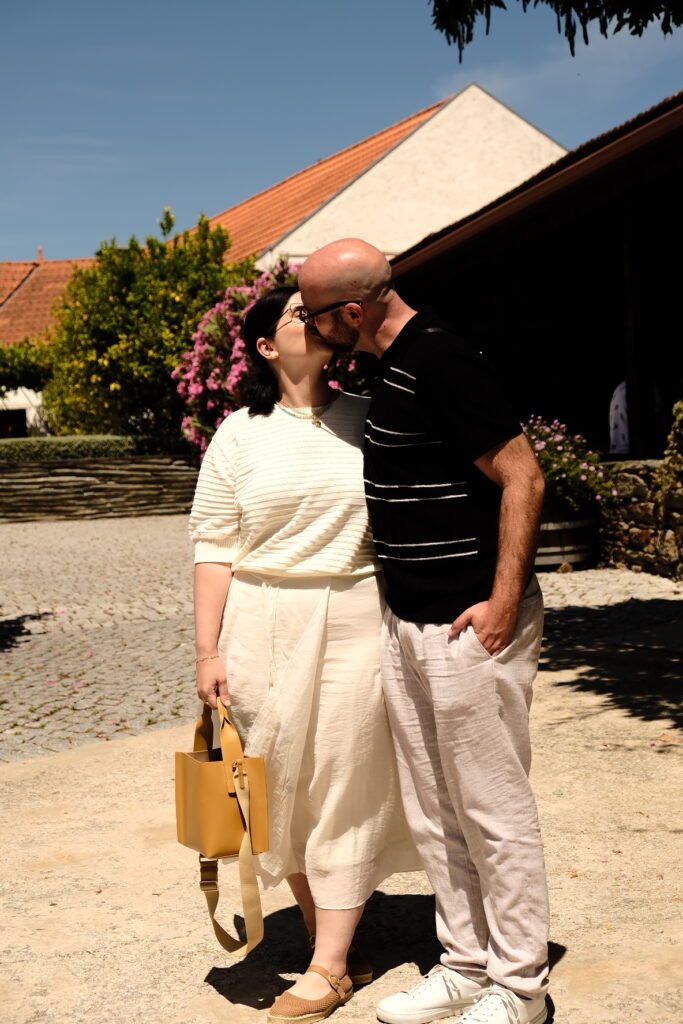
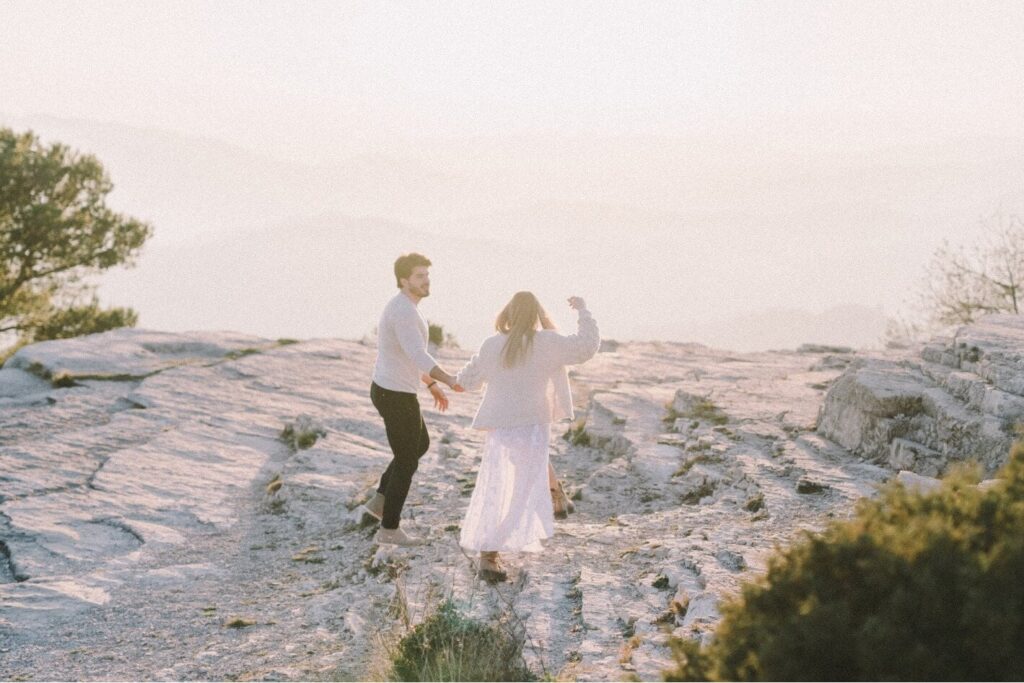
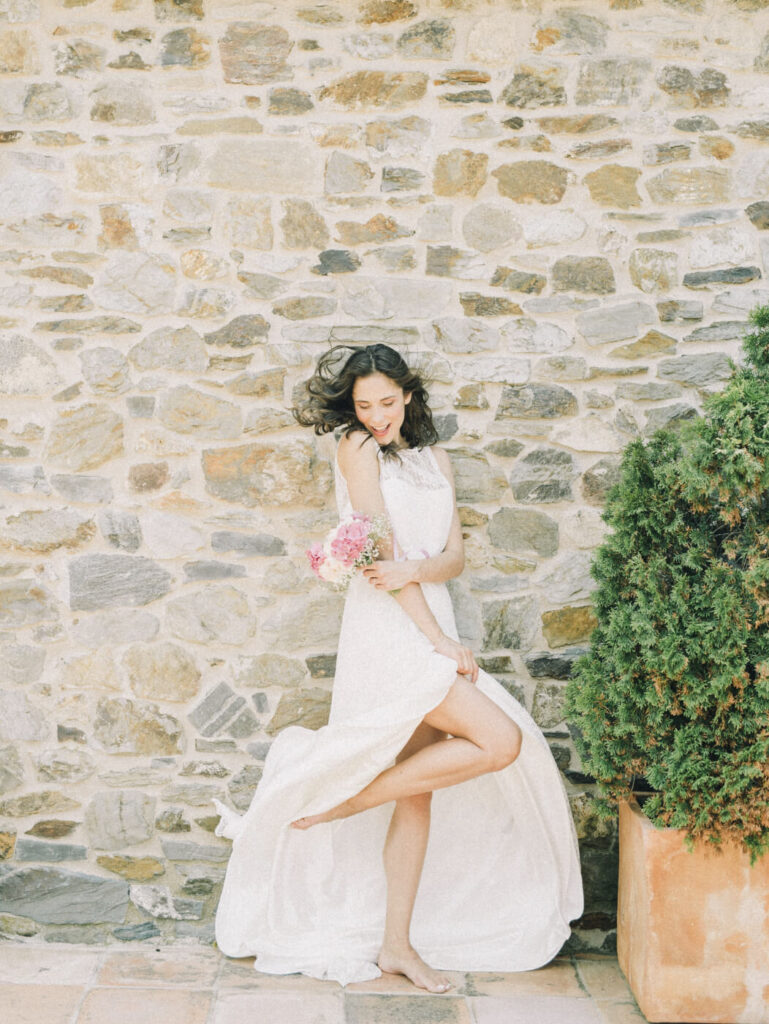
The moment your partner reaches for your hand before the ceremony, the quiet breath before you walk in, the laughter shared over a long dinner table – these are often the images couples treasure most. This intimate wedding photography guide is for couples who want their celebration to feel personal and their photographs to reflect that feeling honestly, with beauty but without performance.
An intimate wedding is not simply a large wedding with fewer guests. It creates a different rhythm: more room for meaningful conversations, more freedom in the timeline, and a closer connection between everyone present. Photography should honor that atmosphere, preserving the texture of the day rather than turning it into a production.
Begin With the Feeling You Want to Remember
Before choosing a venue, creating a schedule, or thinking about a shot list, consider how you want the day to feel. Perhaps you picture a slow morning getting ready together in Lisbon, a cliffside ceremony in the Algarve with only your closest people, or a dinner that lingers into a warm evening in the Douro Valley. The feeling behind those images will guide every practical choice that follows.
Words such as relaxed, elegant, joyful, private, or adventurous are more useful than a folder of poses. Share them with your photographer. They offer a clear creative direction while leaving space for real moments to unfold.
The most enduring photographs tend to come from what is genuinely happening: a parent fastening a cufflink, friends helping with a veil, a private exchange of vows, or the way you look at one another after the ceremony. A strong photographer notices these moments without asking you to recreate them.
Choose a Setting With Space to Breathe
Portugal offers remarkable variety for a small wedding, from historic city courtyards and refined estates to vineyard terraces, coastal paths, and quiet villages. The most photogenic setting is not always the right one. A location should support your experience first, then offer a beautiful visual backdrop.
For an intimate group, think about how the space will work at each stage of the celebration. Is there a calm place to get ready with natural window light? Can guests move easily from ceremony to cocktails? Will you have a private corner for portraits without leaving everyone for too long? These details shape the pace of the day and, in turn, the photographs.
A dramatic landscape can be unforgettable, but it may involve wind, uneven ground, a longer walk, or limited shade. A historic venue may have rich character but darker interiors and more restrictions. Neither option is better in every case. The right choice depends on whether your priority is scenery, ease, privacy, or a balance of all three.
Consider the Light, Not Just the View
The same location can look entirely different at noon and near sunset. Midday light can be bright and direct, especially in summer, while late afternoon brings softer tones and a more romantic atmosphere. If portraits matter deeply to you, protect time close to sunset when possible.
That does not mean you need to build the whole celebration around photographs. A thoughtful timeline can make space for both. Ten quiet minutes after your first look, a short portrait walk during cocktails, and a few final images after dinner may feel more natural than a single long session.
Build a Timeline That Feels Like Your Day
Small weddings are wonderfully flexible, yet they still benefit from structure. Without a plan, portraits can happen in rushed fragments and meaningful moments can be missed while everyone is deciding where to go next. With too much structure, the day can lose its ease.
Aim for a timeline with generous transitions. Allow more time than you expect for getting ready, travel between locations, greetings after the ceremony, and a few unplanned pauses. These are not empty minutes. They are often where the most human photographs happen.
If you are planning a destination celebration, local experience is particularly valuable. Travel times, seasonal light, venue access, parking, and popular public areas can affect what is realistic. A photographer who understands the region can help you create a schedule that feels unhurried while still making the most of the setting.
For most intimate weddings, a first look is worth considering. It can give you a private moment before guests arrive, ease nerves, and create more flexibility after the ceremony. But it is not a requirement. If you have always imagined seeing each other for the first time as you walk down the aisle, keep that moment. The best timeline is the one that feels true to you.
Let Your Photographer Direct, Then Step Back
Many couples worry that natural photography means being left without guidance. In reality, the most relaxed images often come from gentle, confident direction. Your photographer may suggest where the light is best, invite you to walk together, or give you a small prompt that brings you back to each other.
You do not need to know how to pose. You only need to be present. A skilled photographer will pay attention to hands, posture, light, and composition while allowing your interaction to remain your own. Sometimes that means a little guidance. Sometimes it means saying nothing at all.
During portraits, resist the pressure to make every image look perfect. Move slowly, talk to each other, and let a veil catch the breeze if it does. The photographs that stay with you are rarely the most controlled ones. They are the ones that let you recognize yourselves.
Make Room for the People Who Matter
With a smaller guest list, every person has a meaningful place in your story. Tell your photographer who will be especially important to you: a grandparent who traveled far, a sibling who helped you plan, the friend giving a toast, or children who will bring their own joyful unpredictability.
Formal family photographs still matter, particularly when loved ones have gathered from different countries. Keep them efficient by preparing a short list in advance and assigning one person who knows everyone to help gather groups. Once those essential portraits are complete, your photographer can return to documenting connections as they happen naturally.
Do not overlook the quieter scenes around the celebration. Hands passing a glass of wine, guests listening closely during vows, someone wiping away a tear, and conversations at the dinner table often become a fuller record of the people who surrounded you.
Think Beyond the Ceremony
An intimate wedding gives you permission to design moments that might feel difficult at a larger event. You could exchange letters over coffee, take a short walk together before dinner, read private vows in a secluded spot, or step outside for five minutes beneath the evening sky.
These moments do not need to be created for the camera. They simply offer you space to be together, which naturally gives your photographs emotional depth. If you are planning an elopement or a celebration with only a handful of guests, this is especially powerful. The day can move at the pace of your relationship rather than the pace of a crowd.
Consider including some sense of place as well. A quiet street after rain, tiled walls outside your venue, the sweeping vineyards beyond a dinner table, or the Atlantic light along the coast can become part of the visual memory without taking attention away from you.
Prepare for Weather and the Unexpected
Portugal is known for generous light, but weather is still part of any outdoor celebration. Summer heat, coastal wind, and occasional rain deserve a calm backup plan. Ask your venue about covered areas, select footwear that works for the terrain, and keep a few flexible options in the schedule.
A change in weather is not automatically a problem for photographs. Cloud cover can create soft, flattering light. Wind can bring movement to a dress or veil. Rain can make stone streets shine. The key is working with the conditions safely and comfortably rather than trying to ignore them.
Also consider your guests’ comfort. Water, shade, easy transportation, and a clear plan for changing temperatures allow everyone to stay present. When people feel cared for, their expressions become more open and relaxed.
Share What Matters Before the Wedding
The more your photographer understands your story, the more personal the imagery can become. Share the parts that may not be obvious from a schedule: how you met, why you chose Portugal, who you are closest to, and what you feel nervous about. If you have a family dynamic that needs sensitivity or a meaningful heirloom you want documented, say so early.
At Wedding Photographer Portugal, this conversation is treated as part of the creative process, not an administrative detail. It helps shape an experience where you can feel supported rather than observed.
You can also communicate visual preferences, but leave room for your photographer’s eye. A few examples can reveal whether you love candid movement, editorial portraits, softer colors, black-and-white emotion, or grand landscape images. A long list of exact recreations, however, can make the day feel like a checklist. Trust works best when you choose a photographer whose work already feels close to your own sense of beauty.
Your wedding photographs do not need to prove that every detail went exactly as planned. They only need to bring you back to the warmth of the day: the people, the place, the promise, and the quiet certainty of choosing one another. Give those moments room, and they will be there for you to return to for years to come.
Related Articles