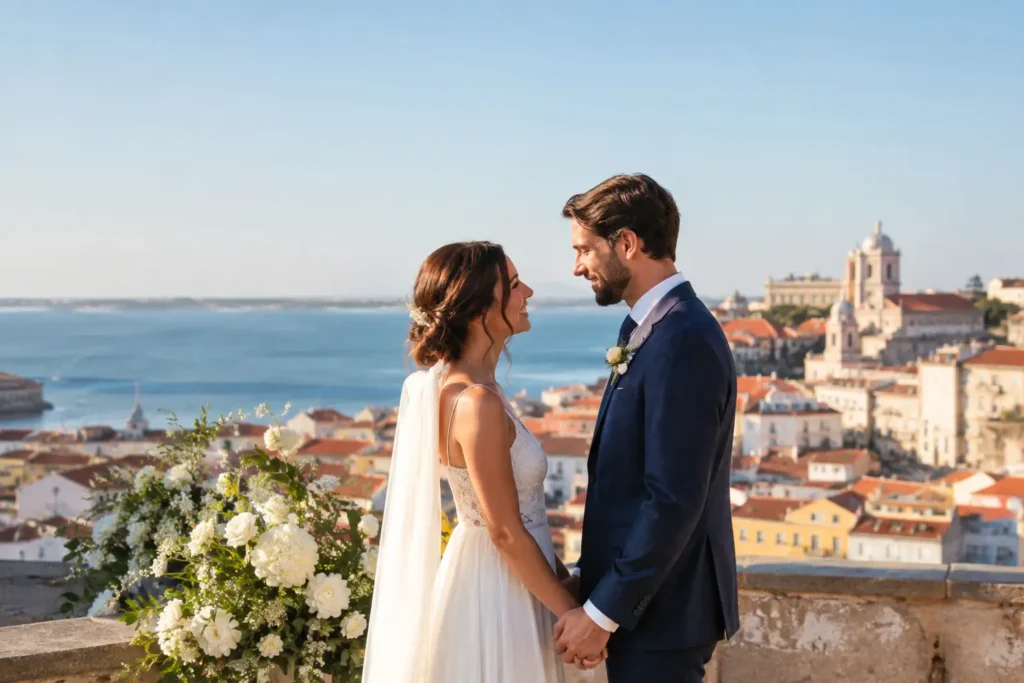
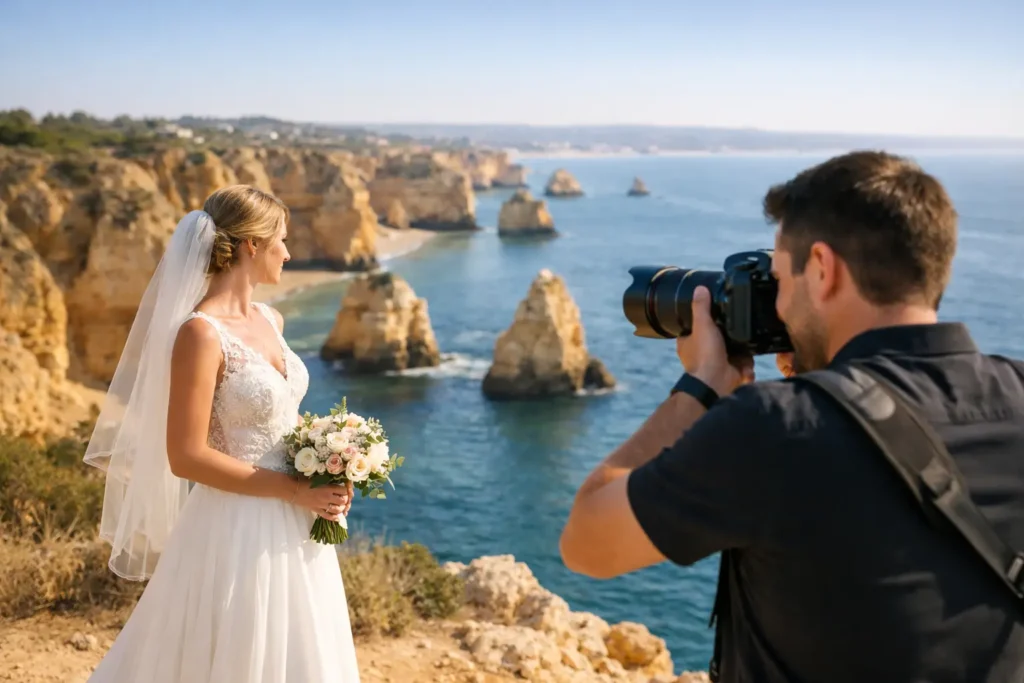
A ceremony on a cliff above the Algarve at sunrise does not ask for the same kind of photography as a candlelit celebration with 120 guests in Lisbon. The question of elopement vs wedding photography is not simply about scale. It is about how you want the day to feel, how much space you want for one another, and which moments you hope to recognize when you look back years from now.
Both experiences can be deeply beautiful. Both deserve thoughtful, artful documentation. Yet the rhythm, emotional texture, and practical needs of each are wonderfully different.
Elopement vs Wedding Photography: The Essential Difference
Wedding photography tells the story of a shared celebration. Alongside the vows and quiet glances, it holds the energy of family arrivals, friends on the dance floor, a parent adjusting a veil, the room settling before a toast. The photographs become a record not only of your commitment, but of the people who surrounded you as you made it.
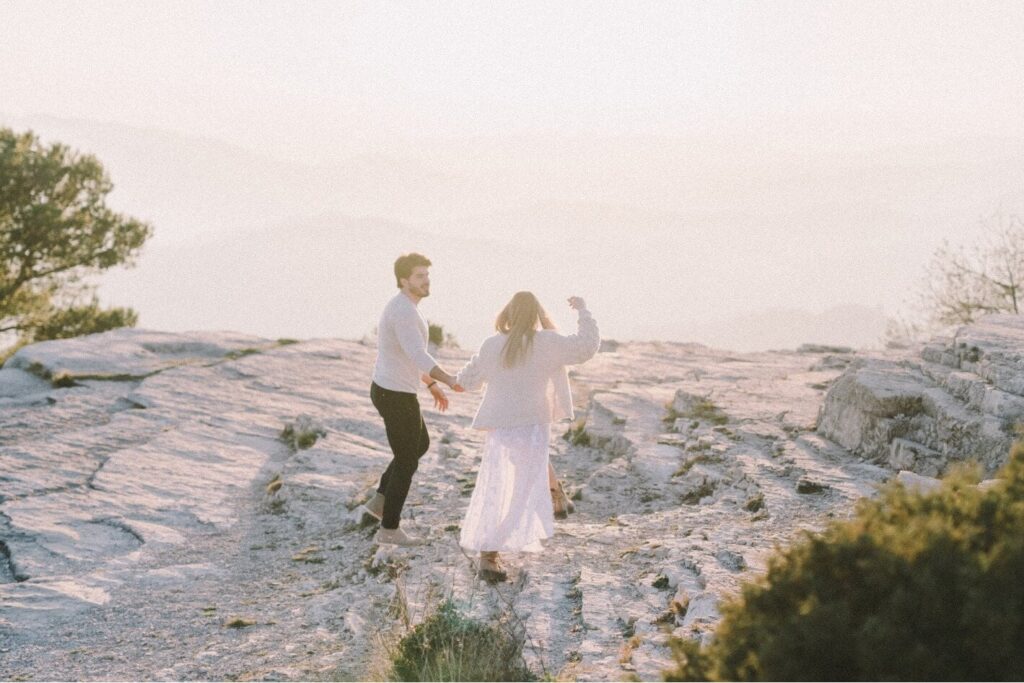
Elopement photography is often more inward-looking. With fewer people, or sometimes only the two of you, there is more room for stillness. A photographer can follow the day at a gentler pace: the anticipation of getting ready in a historic hotel, the walk toward a private ceremony spot, a long pause after the vows, dinner at a table for two as the light falls.
Neither is more meaningful than the other. The difference is where the story lives. A wedding story expands outward, embracing your community. An elopement story lingers closely on the connection between the two of you.
The Pace of the Day Changes the Pictures
A larger wedding has a natural momentum. There are more transitions, more people to greet, and more moments happening at once. This creates photographs full of movement and atmosphere: laughter during cocktails, hands reaching for champagne, grandparents watching a first dance, friends gathering you into a joyful embrace.
It also calls for careful planning. Group portraits need a clear window in the timeline. Travel between a ceremony, reception, and portrait location must be realistic. A skilled wedding photographer anticipates family dynamics, shifting light, and the small delays that come with a full day of celebration, while protecting time for photographs that still feel relaxed and true to you.
An elopement generally gives you greater flexibility. You may choose to exchange vows in the early morning, when a place is quiet and the light is soft, then spend the afternoon exploring somewhere meaningful. In the Douro Valley, that could mean a scenic drive between vineyard terraces. In Porto, it might be an unhurried walk along the river after your ceremony.
More time does not mean every moment must become a photo session. The most natural elopement images often happen when there is room to breathe. You can talk, take in the view, hold hands, and simply be present. Gentle direction helps you feel comfortable, but the goal is never to turn the day into a performance.
Intimacy Looks Different in Every Celebration
Couples are sometimes drawn to elopements because they want a day without pressure. They may not enjoy being the center of attention, or they may want to invest in an experience rather than a traditional event. For them, intimate photography is not about having fewer images. It is about making images with a different emotional focus.
There can be an extraordinary honesty in a private vow exchange. Without an audience, people often let go of the expectation to react in a certain way. Tears come easily. Laughter is quieter. A hand squeeze can say more than a grand gesture. These are the details that make an elopement gallery feel personal rather than posed.
But intimacy is not exclusive to elopements. A full wedding day contains private moments, too. The best wedding photography makes space for them: a few minutes alone after the ceremony, a calm portrait session away from the reception, or the look you exchange across a crowded room when no one else notices.
If sharing your joy with family and friends matters deeply to you, do not assume an elopement is automatically the more authentic choice. Being witnessed can be profoundly moving. The right decision is the one that reflects your relationship, not the one that appears simplest on a mood board.
What Each Type of Coverage Usually Includes
Elopement coverage can be shorter, but it does not have to be. A simple city hall ceremony followed by portraits may need only a few hours. A destination elopement with getting ready, a ceremony in a remote location, a celebratory meal, and sunset portraits can easily become a full-day story.
Because the guest list is small, the photographer’s attention can stay close to your experience. There is often time to document the setting with more intention as well. The architecture of a Lisbon courtyard, the wind moving through your dress along the coast, or the quiet beauty of a table set for two can become part of the narrative rather than just a backdrop.
Wedding coverage usually spans more of the day because the story has more chapters. It may begin with preparations in separate rooms and continue through the ceremony, family portraits, cocktail hour, dinner, speeches, and dancing. The result is a layered collection of images that includes both polished portraits and fleeting, unrepeatable reactions.
For either format, the number of hours should follow the experience you want documented, not a fixed label. A two-person elopement may deserve extensive coverage. A small wedding with a straightforward schedule may need less. The most useful conversation is not, How many hours should we book? It is, Which parts of this day will matter most when we remember it?
Portugal Adds Its Own Considerations
Destination plans deserve a little extra care, especially when photography is central to the experience. Portugal offers remarkable variety within a relatively easy journey: grand city architecture, Atlantic coastlines, quiet countryside, vineyards, and warm, textured light. That variety can shape the kind of celebration that feels right for you.
For an elopement, consider privacy, access, weather, and the time of day. A dramatic viewpoint may be beautiful at sunset but busy in high season. A hidden coastal location may require a walk over uneven ground. The most effortless-looking photographs are often supported by thoughtful local planning, with a location that suits your comfort, attire, and vision.
For weddings, timing becomes especially valuable. Portuguese summer light can be bright and warm well into the evening, which makes later ceremonies and sunset portraits particularly appealing. If you are bringing guests from abroad, a timeline with breathing room also helps everyone feel less rushed and more present.
Local knowledge is not only about finding a beautiful place. It is knowing how the light moves through it, when a street becomes crowded, how long travel really takes, and where you can step away for ten quiet minutes together.
How to Decide What Feels Most Like You
Try picturing the moment immediately after your vows. Do you want to turn and see the faces of everyone you love? Or do you want to walk away together, with nowhere else to be? Your answer may reveal more than any budget spreadsheet.
A wedding may be right for you if your relationships and shared community are central to your vision of the day. You may value the spontaneous energy of a full room, meaningful traditions, and photographs that let guests relive the celebration with you.
An elopement may be right if you want a slower, more personal experience with the freedom to shape the day around your own rituals. It can be especially fitting for couples who see travel as part of their love story, who want an extraordinary setting, or who would rather spend their energy on presence than production.
There is also a beautiful middle ground. A small destination wedding can offer the warmth of loved ones and the intimacy of a quieter celebration. You might invite your closest people for a ceremony and dinner, then plan a private morning or sunset portrait session just for the two of you. You do not have to choose between connection and calm.
The photographs you cherish most will not depend on whether there were two guests or two hundred. They will come from choosing a day that gives you permission to feel fully yourselves, then allowing enough time to notice the beauty of being there together.
Related Articles