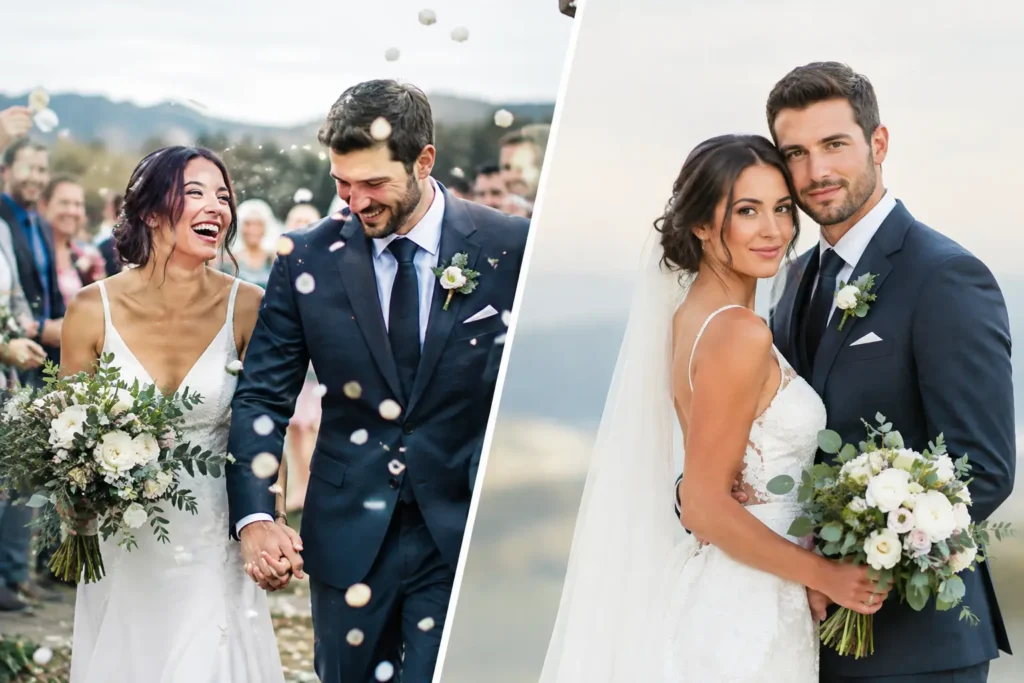
The moment you begin walking toward each other, everything tends to move faster than expected. A Portugal ceremony photography guide should help you protect that feeling: the held breath before your vows, the hands reaching for one another, the joyful faces of the people who traveled far to celebrate with you. Beautiful photographs begin well before the ceremony itself, with thoughtful timing, a setting that feels like you, and the freedom to be present.
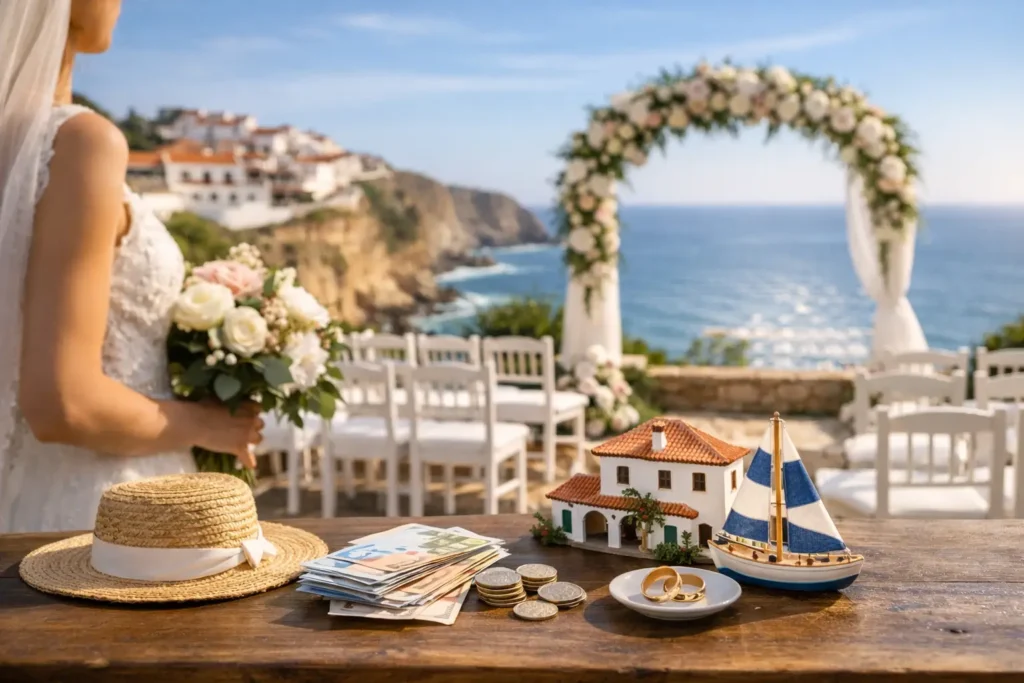
Portugal offers an extraordinary range of ceremony backdrops, from a sunlit Lisbon terrace to a quiet vineyard in the Douro Valley, an intimate Porto chapel, or a cliffside gathering in the Algarve. Yet the most memorable images do not rely on scenery alone. They come from the connection between your setting, your guests, and the honest emotion of the day.
Start With How You Want the Ceremony to Feel
Before choosing a ceremony layout or a photography timeline, consider the atmosphere you want to create. Do you picture a formal exchange of vows in a historic estate, a relaxed outdoor ceremony with the Atlantic in view, or a small elopement where the landscape becomes part of the experience? Your answer will shape the light, movement, guest experience, and photographic approach.
A ceremony that feels personal is naturally easier to photograph. When couples are not performing for the camera, their expressions settle into something more meaningful. The goal is not to direct every second, but to create conditions where you can stay close to one another and let the story unfold.
If you are planning from the United States or another country abroad, share your priorities early with your photographer and planner. A local team can help you understand what is realistic at your venue, from sound restrictions to access routes, weather patterns, and the best time of day for your ceremony.
Choose Ceremony Light With Care
Light gives ceremony images their emotional tone. In Portugal, the sun can be wonderfully soft in the morning and late afternoon, while midday light is often bright, direct, and less forgiving, particularly in open coastal or vineyard settings.
For an outdoor ceremony, an hour and a half to two hours before sunset often creates gentle, flattering light and leaves time for portraits afterward. This is not a rigid rule. A ceremony beneath trees, on a shaded terrace, or within a courtyard can work beautifully earlier in the day. The right choice depends on your venue’s orientation, the season, and where the sun falls during your vows.
In summer, Portugal’s long, luminous evenings can be a gift. They allow for a later ceremony and a relaxed transition into cocktail hour. In spring and fall, the light changes more quickly, so a carefully planned schedule becomes more valuable. Winter celebrations can be deeply atmospheric, especially in historic interiors, but daylight hours are shorter and deserve close attention.
Ask your photographer to review the ceremony location before finalizing your schedule whenever possible. A few small adjustments, such as turning the aisle slightly or moving your exchange of vows a few feet into open shade, can make a visible difference without changing the character of the event.
Plan a Layout That Keeps You Connected
The ceremony layout affects much more than logistics. It determines what you see when you look up, how your guests experience the vows, and whether your photographs feel open and alive or visually crowded.
A centered aisle with guests on both sides creates a classic sense of arrival. A semi-circle arrangement can feel more intimate and lets your loved ones appear naturally around you in the frame. For small elopements, placing only a few chairs or having guests stand at a respectful distance may suit the setting better than a formal arrangement.
Try to leave clear space behind the officiant and around the couple’s position. Floral arrangements, pillars, and arches can be exquisite, but they should frame your faces rather than block them. If you are choosing a ceremony arch, consider one with an open center or asymmetrical florals. It will photograph with greater depth and allow the landscape or architecture to remain part of the story.
It also helps to ask guests to keep phones away during the processional and vows. This is never about creating a perfect, silent audience. It is about allowing people to look at you rather than at a screen, which creates more emotional images and a more connected ceremony.
Let the Ceremony Have Room to Breathe
Many couples worry that a ceremony must be brief to keep guests engaged. A concise ceremony can be wonderful, but rushing through the moments that matter most can make the experience feel less personal. Build in a little space after the processional, before the first vow, and following the kiss.
These pauses give you time to take in what is happening. They also create photographs with a sense of anticipation rather than urgency. A glance toward a parent, a laugh after an emotional line, or a quiet squeeze of the hand often becomes one of the images you return to for years.
If you are incorporating traditions, tell your photographer what they mean to you. This might be a family blessing, a reading in Portuguese and English, a symbolic ritual, or the music chosen for your entrance. Knowing the significance helps a photographer anticipate the right moments rather than simply record the sequence.
A Portugal Ceremony Photography Guide to Weather Plans
Portugal is known for its sunshine, but outdoor celebrations still need a graceful Plan B. Coastal wind, sudden spring showers, and intense summer heat can all influence comfort and photography. A backup plan is not a compromise. It is part of hosting your ceremony with confidence.
Choose a covered option that you would be happy to use, not merely tolerate. A glass pavilion, a covered terrace, a historic interior, or a tent with thoughtful lighting can feel every bit as beautiful as an open-air ceremony. If rain is possible, clear umbrellas in advance with your venue or planner. They preserve natural light and keep faces visible in photographs.
For warm-weather ceremonies, offer water before guests are seated and consider shade where possible. If wind is common at your venue, secure loose floral elements and choose a hairstyle that will still feel beautiful when touched by the breeze. The most elegant solution is often the one that works with the setting rather than against it.
Create Time for the Images You Will Want Later
Your ceremony is not a portrait session, and it should never feel interrupted by photography. Still, a well-designed timeline protects the opportunities that are hard to recreate later.
Allow a few quiet minutes after the ceremony for just the two of you. Whether it is a short walk through the venue, a pause on a terrace, or a moment in the garden while guests begin cocktail hour, this is often when the emotion settles in. It gives you a chance to be together, and it gives your photographer space to create natural portraits without pulling you away for too long.
Family photographs benefit from preparation as well. Decide in advance which combinations matter most and appoint one person who knows your guests to help gather them. Keeping this portion organized means you can return to your celebration quickly, without losing the warmth of the moment.
Trust the Story More Than the Perfect Pose
The strongest ceremony photographs are rarely the ones where everyone looks exactly as planned. They are the images of your partner wiping away a tear, a grandparent smiling from the front row, or the wind lifting your veil just as you begin to laugh.
A skilled photographer will offer gentle guidance when needed – helping you stand in the best light, suggesting a little space between you during the vows, and making sure important family moments are not missed. But the heart of the work is observation. Your ceremony deserves to look like it felt, not like a staged version of a wedding day.
As you plan, make choices that bring you closer to the people and places you love. Let the Portuguese landscape add its quiet beauty, then give yourselves permission to forget the camera for a while. The photographs will hold the proof that you were fully there.
Related Articles