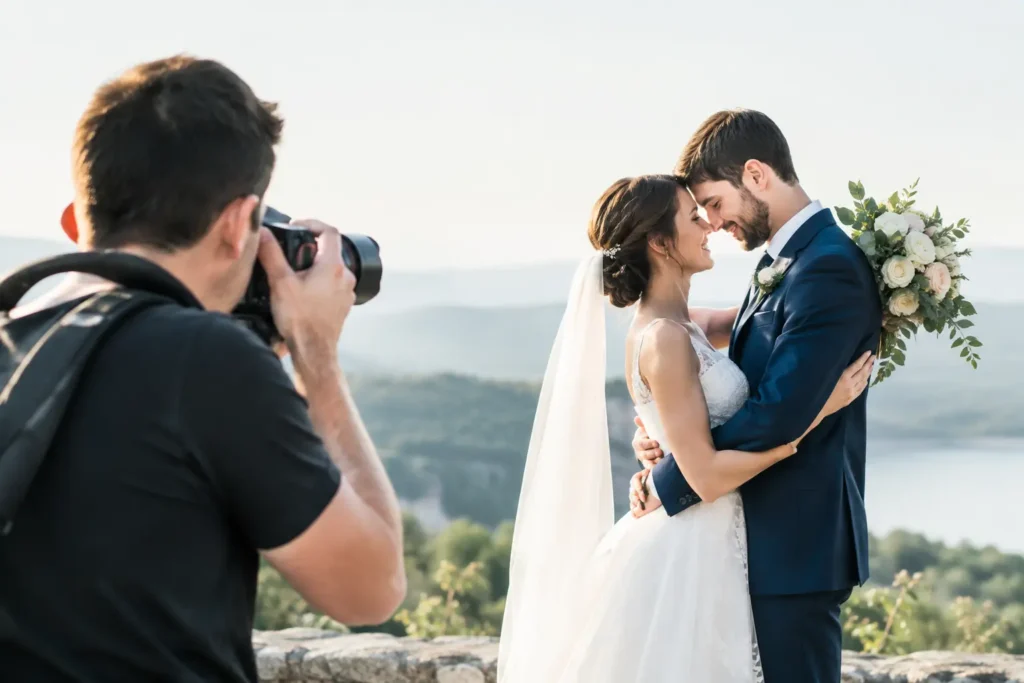
A sunlit terrace in Lisbon, a quiet vineyard in the Douro Valley, Atlantic wind along the Algarve coast – Portugal offers settings that can feel cinematic without asking you to perform for the camera. Knowing how to plan Portugal wedding photography means making room for those real moments while building a day that feels calm, personal, and true to you.
For destination couples, photography planning is about more than choosing beautiful views. It is about timing, trust, logistics, and finding a photographer who can guide you with confidence while preserving the feeling of the day. The strongest images usually come from a celebration that has been planned thoughtfully, then lived fully.
Start With the Feeling You Want to Remember
Before discussing hours, shot lists, or locations, consider what you want your photographs to carry years from now. Perhaps it is the anticipation of getting ready with your closest friends, your parents seeing you dressed for the first time, or the relief and laughter that arrives after the ceremony. Maybe you are drawn to editorial elegance, but still want the photographs to feel effortless rather than overly posed.
This conversation shapes every practical decision that follows. A fast-paced wedding with 150 guests needs a different photography approach from a two-person elopement on a coastal cliff. Neither is better. The question is how much of the day you want documented and where you want the emotional focus to live.
Share reference images as a starting point, but also explain what you respond to in them. Is it the soft light, the intimacy, the movement, or the sense of place? A photographer can recreate a mood more honestly than an exact frame from another wedding.
Choose Your Portugal Setting With Light in Mind
Portugal’s regions are wonderfully distinct, and each has its own rhythm on camera. Lisbon brings historic façades, tiled courtyards, elevated viewpoints, and warm urban energy. Porto feels more textured and intimate, with river light, old streets, and a quieter romantic character. The Douro Valley offers sweeping vineyard landscapes and river reflections, while the Algarve is known for cliffs, beaches, and open skies.
A beautiful venue is only one part of the visual story. Ask how the ceremony space faces the sun, whether there is open shade for portraits, and how far guests will need to travel between locations. A ceremony held in strong midday light can still be photographed beautifully, but it may call for a shorter portrait session later in the day when the light is softer.
If your venue has a dramatic exterior, plan enough time to use it. Couples sometimes book a property for its scenery, then discover their schedule allows only ten minutes outside after dark. A small adjustment to the timeline can make the setting feel like a genuine part of your wedding story rather than a backdrop glimpsed in passing.
Consider the season, not just the forecast
Portugal has generous light for much of the year, but conditions vary by region and season. Summer can bring intense afternoon sun, particularly in the Algarve and open areas of the Douro Valley. Spring and fall often offer softer temperatures and a gentler pace, though rain remains possible. Winter weddings can be deeply atmospheric, especially in cities, but daylight hours are shorter.
Build in a weather alternative that you would be happy to use, not simply tolerate. Covered terraces, window-filled rooms, historic interiors, and sheltered walkways can create a beautiful visual plan when rain or wind changes the original idea. A thoughtful backup allows you to remain present instead of watching the sky all day.
How to Plan Portugal Wedding Photography Around the Light
For natural, luminous portraits, schedule your couple session close to sunset whenever possible. This does not mean disappearing from your celebration for an hour. Often, 20 to 30 quiet minutes is enough, especially when your photographer knows the venue and has planned the route in advance.
Think of this time as a pause together. After the ceremony, greetings, family photos, and the energy of cocktail hour, it can be the first moment you have had alone. The most meaningful portraits often happen then, when the day has begun to settle and you no longer need to think about where to stand.
If sunset falls during dinner, consider stepping out briefly between courses or planning a first-look earlier in the day. A first-look is not required, and some couples prefer to see each other for the first time at the ceremony. But it can create a more relaxed timeline, allowing for portraits before guests arrive and giving you more time at your reception.
The right choice depends on your priorities. Tradition may matter deeply to you, or you may value joining every moment of your cocktail hour. Both deserve to be respected. Your photography plan should support the wedding experience you want, not dictate it.
Give the Day Breathing Room
Tight schedules are one of the most common sources of wedding-day stress. Travel time in Portugal can be less predictable than it looks on a map, especially in historic city centers, narrow country roads, or popular coastal areas during high season. Add realistic buffers between hair and makeup, dressing, transport, family portraits, and the ceremony.
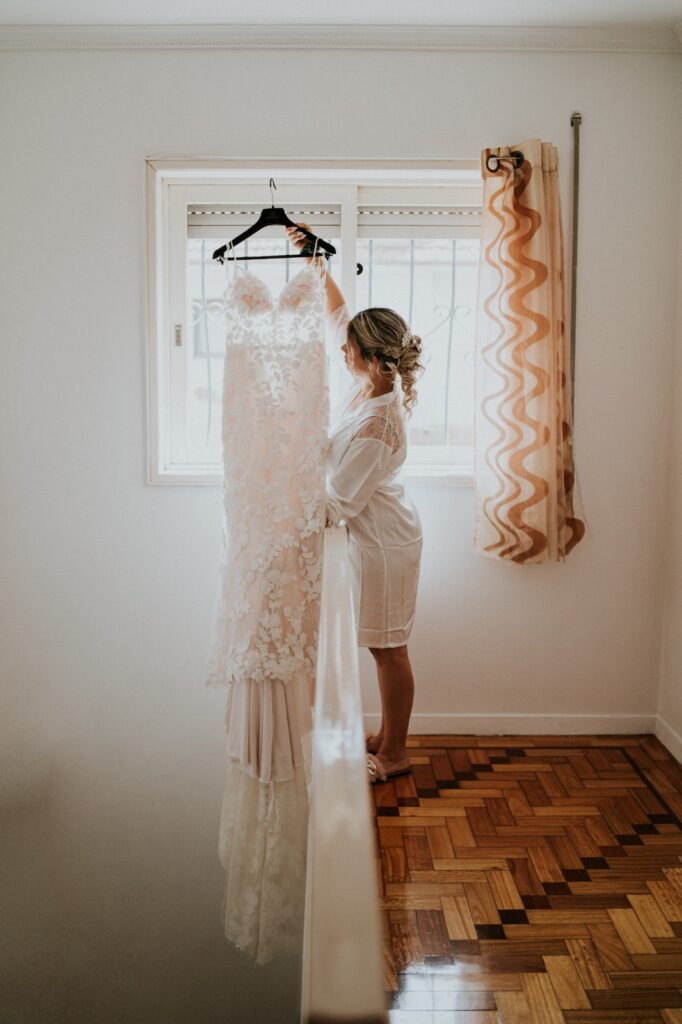
Getting ready deserves particular care. Choose a room with natural window light and enough space for the people who will be with you. Keep bags, garment covers, water bottles, and vendor cases in one designated corner if possible. This is not about creating a perfect room. It simply gives your photographs a calmer visual frame and helps you move through the morning with ease.
Family formals are another place where preparation is kind. Create a concise list of essential groupings before the wedding and ask one trusted person who knows both families to help gather people. Most couples need only 15 to 25 minutes for these portraits when everyone is close by and expectations are clear.
Choose Coverage for the Story, Not a Checklist
Photography coverage should reflect the shape of your celebration. For an intimate elopement, a few carefully chosen hours may be enough to document preparation, vows, portraits, and a meaningful walk through the landscape. For a full destination wedding, longer coverage often allows the story to unfold naturally from morning anticipation through dinner, speeches, dancing, and the quieter moments between them.
Consider the parts of the day that matter beyond the ceremony. Are you exchanging private letters? Will there be a traditional entrance, heartfelt toasts, a sunset boat ride, or a lively dance floor? These are not extras if they are central to your experience.
A second photographer can be valuable for larger weddings, separate getting-ready locations, or celebrations where you want simultaneous perspectives. One photographer may capture your walk down the aisle while another photographs your partner’s reaction, for example. For smaller weddings, a single photographer can offer a more intimate and unobtrusive presence. It depends on guest count, logistics, and how expansive you want the visual record to be.
Let Your Photographer Guide, Not Stage, You
Many couples worry that they will feel awkward in photographs, especially when they have not been professionally photographed before. You do not need to know how to pose. The best direction is gentle and specific: where to stand for flattering light, how to move naturally, when to look at each other, and when to simply forget the camera is there.
Look for a photographer whose portfolio reflects the balance you want. If you value candid emotion, pay attention to whether the images show genuine interaction as well as polished portraits. If you love refined composition, notice how people are placed within a setting and whether the images still feel alive.
Your connection with the person behind the camera matters as much as their technical skill. A pre-wedding conversation can clarify your comfort level, family dynamics, priorities, and any moments that may feel sensitive or especially meaningful. When a photographer understands what matters to you, they can anticipate rather than interrupt.
Make Space for Portugal Beyond the Wedding Day
Destination wedding photography can extend beyond the ceremony itself. A relaxed portrait session in the days before or after the wedding offers time to experience Portugal without the demands of a full schedule. It may be a walk through Porto at sunrise, an evening by the water in Lisbon, or a quiet session among the vineyards.
This is especially worthwhile if you want photographs in more than one setting or if your wedding day will be tightly structured. You can wear something entirely different, move at an unhurried pace, and let the location become part of your memories of the trip.
As your plans take shape, protect a few unplanned minutes in the schedule. Hold hands before entering the reception, step outside after dinner, or pause together at the edge of the dance floor. Those small moments are often where the photographs become most personal – not because they were arranged perfectly, but because you were fully there for them.