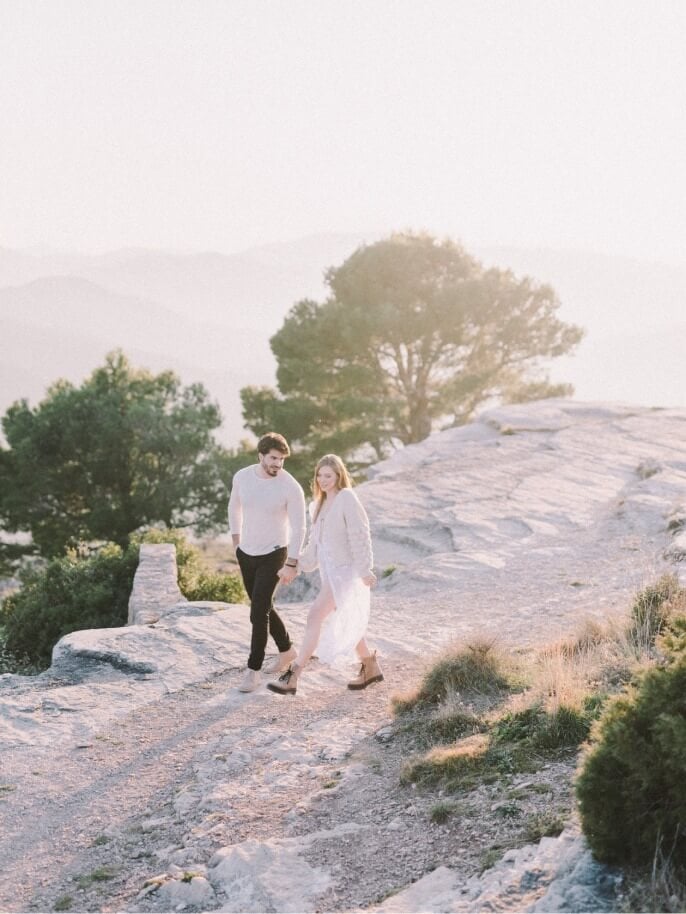
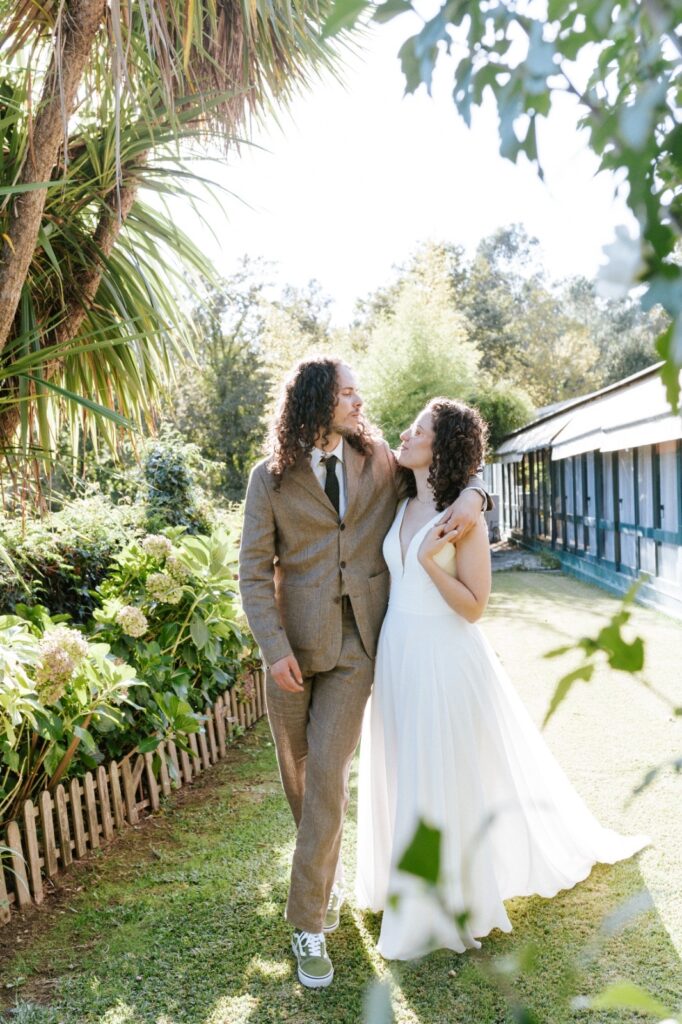
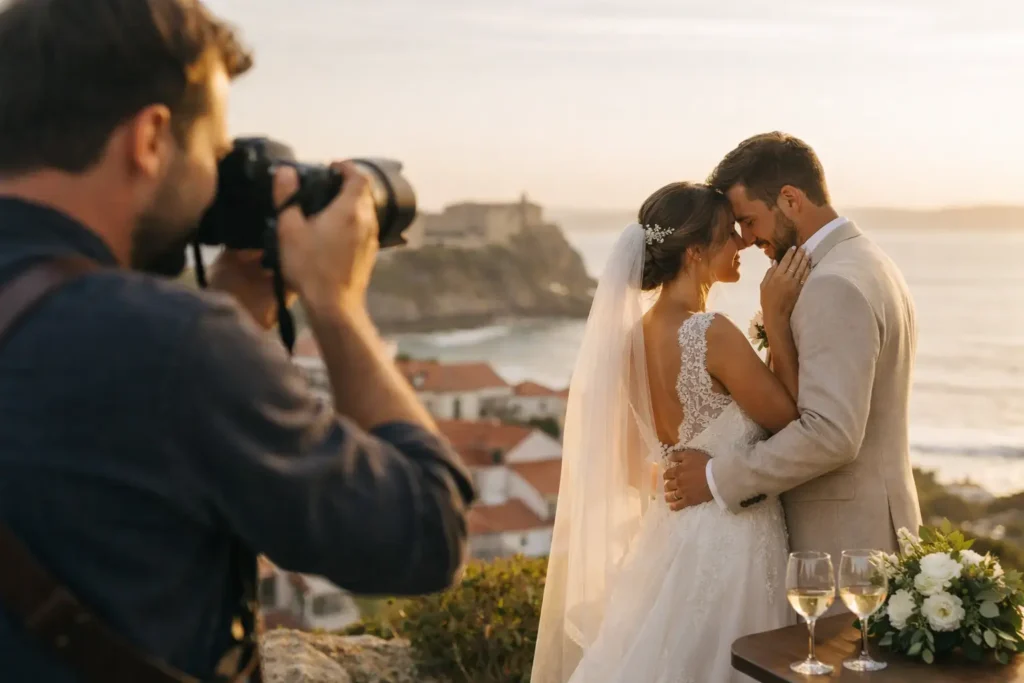
A silk veil catches the breeze on a Lisbon terrace. Your friends are laughing before dinner. The light changes across the Douro Valley just as you take a quiet moment together. An editorial wedding photography style is made for these scenes – not because they need to be manufactured, but because they deserve to be seen with intention.
For couples planning a celebration in Portugal, the appeal is often clear: you want photographs with the elegance of a magazine feature and the emotional truth of your actual wedding day. You want to look your best, feel comfortable, and recognize yourselves in every image years from now. Editorial photography can hold all of that when it is approached with care.
What Is Editorial Wedding Photography Style?
Editorial wedding photography takes visual cues from fashion, art, and print storytelling. It pays close attention to composition, light, movement, setting, wardrobe, and the small details that give a celebration its character. The result often feels polished, cinematic, and beautifully considered.
But the strongest editorial work is not a day of constant posing. It is a balance of direction and observation. Your photographer may guide you toward flattering light, suggest where to place your hands, or create space for a portrait after the ceremony. Then, just as importantly, they step back when the moment belongs to you: a parent adjusting your veil, a nervous breath before walking down the aisle, the full release of laughter during a toast.
That balance is what separates editorial wedding imagery from photographs that feel overly styled or emotionally distant. A beautiful image should still carry the energy of the people in it.
Refined does not mean rigid
Many couples hear “editorial” and imagine stiff expressions, dramatic poses, and an entire day spent away from their guests. That is one version of the style, but it is not the only one. A more natural editorial approach uses gentle, clear prompts rather than complicated poses.
You might be invited to walk slowly toward a window, lean into each other during a quiet pause, or look at one another instead of the camera. These small adjustments create shape and confidence without asking you to perform. The image feels elevated because the photographer understands light and composition, not because your connection has been replaced by a pose.
This is especially valuable if being photographed makes you nervous. Good direction gives you something simple to do, while leaving room for your real expressions to emerge.
The Visual Language Behind the Images
Editorial photography is not defined by one preset, one color palette, or one type of venue. It is a way of seeing. The visual choices should reflect the atmosphere of your celebration rather than impose a trend that will date quickly.
Light is central. Soft window light can make a getting-ready portrait feel intimate and painterly. Bright Algarve sun may call for a clean, sunlit look with strong shadows and vibrant architectural lines. At blue hour, the deepening sky and warm reception lights can create a sense of quiet romance that no studio setup can replicate.
Composition matters just as much. A photographer may use an archway to frame you, leave generous negative space around a sweeping landscape, or photograph a table setting in a way that reveals the rhythm of the room. These choices give images a purposeful, editorial quality. Yet the photograph still needs a heartbeat. The gesture, glance, or movement within the frame is what makes it yours.
Details also receive thoughtful attention. Your stationery, florals, heirloom jewelry, place settings, and fabric textures are part of the visual story, particularly when they were chosen with care. They should be documented beautifully, but never at the expense of time with the people you love.
Why Portugal Works So Naturally for an Editorial Look
Portugal has an uncommon ability to feel grand and intimate at once. Historic tiles, ocean light, vineyard terraces, stone estates, and elegant city architecture offer visual depth without requiring elaborate production. A single location can provide a range of scenes that feel distinct while remaining cohesive.
In Porto, layered facades and the river create texture and atmosphere. Lisbon offers warm-toned streets, refined hotels, and panoramic viewpoints. The Algarve brings dramatic coastlines and a bright, effortless sense of place. In the Douro Valley, the contours of the vineyards make even a quiet walk feel cinematic.
Still, a remarkable setting is only one part of the picture. The location should support your experience, not turn your wedding into a photo shoot. A thoughtful timeline allows for portraits when the light is kind, while preserving time to be present with your guests. Sometimes that means a short sunset session; sometimes it means choosing one beautiful corner close to the celebration and keeping the portrait time simple.
How Direction Creates Natural-Looking Photographs
The paradox of natural-looking wedding photographs is that they often require thoughtful preparation. A photographer who understands your venue, the schedule, and the changing light can anticipate what is needed before you feel rushed.
During portraits, direction should be easy to follow and responsive to who you are together. If you are playful, there should be room for movement and laughter. If you are quieter, the images can lean into stillness, touch, and a more intimate pace. There is no need to copy a pose from someone else’s wedding when your own connection gives the photographs their meaning.
The same care applies to candid moments. Documentary images are not accidental snapshots. A skilled photographer watches for clean backgrounds, emotional interactions, and the split second when a scene becomes a memory. They know when to move closer and when to remain invisible.
At Wedding Photographer Portugal, this approach begins well before the wedding day. Understanding what matters most to you, from family relationships to the feeling you want at dinner, helps create photographs that are both artful and deeply personal.
Planning for an Editorial Wedding Photography Style
You do not need a fashion-industry budget or a perfectly choreographed wedding to achieve an editorial feel. You do need a few choices that give your day room to breathe.
Start with a timeline that protects the experiences you care about. Allow enough time for getting-ready photographs in a calm, light-filled space. Consider a first look if private portraits before the ceremony would make the afternoon more relaxed. Reserve a small window near sunset if the venue has a view worth savoring. These are not rules, and they are not right for every wedding, but they can make a meaningful difference.
Think about the visual environment, too. Cluttered rooms, harsh overhead lighting, and crowded schedules can make even the most beautiful venue harder to photograph. You do not need to control every detail. Simply choosing a tidy getting-ready room, placing meaningful items together, and discussing the ceremony light with your planner can help.
Your wardrobe should feel like you. Editorial images benefit from thoughtful textures, tailoring, and movement, but comfort remains essential. A dress you cannot walk in or shoes that hurt after ten minutes will show in your body language. The most elegant choice is usually the one that lets you be fully present.
Finally, share what you value with your photographer. Mention the people whose reactions matter most, the family heirloom you hope to preserve in photographs, and whether you prefer more guidance or a quieter documentary presence. Personal information is not a burden. It is the foundation of a visual story that feels truthful.
Is This Style Right for Your Wedding?
Editorial photography is a wonderful fit if you are drawn to intentional imagery and want your wedding to feel visually cohesive without becoming overly formal. It suits couples who appreciate beautiful surroundings, want confidence in front of the camera, and care as much about honest emotion as they do about a striking portrait.
There are trade-offs. More directed portraits take a little time, and a highly styled approach can feel less spontaneous if it is pushed too far. If your priority is to have every minute entirely unstructured, a purely documentary style may be a better match. Most couples find their best fit somewhere in between: a photographer who can create beautiful portraits efficiently, then let the celebration unfold.
The right images will not ask you to choose between beauty and feeling. They will preserve the way the day looked, certainly, but also the way it felt to stand together in a place you chose, surrounded by the people who came to celebrate your story. That is the kind of elegance worth carrying forward.
Related Articles