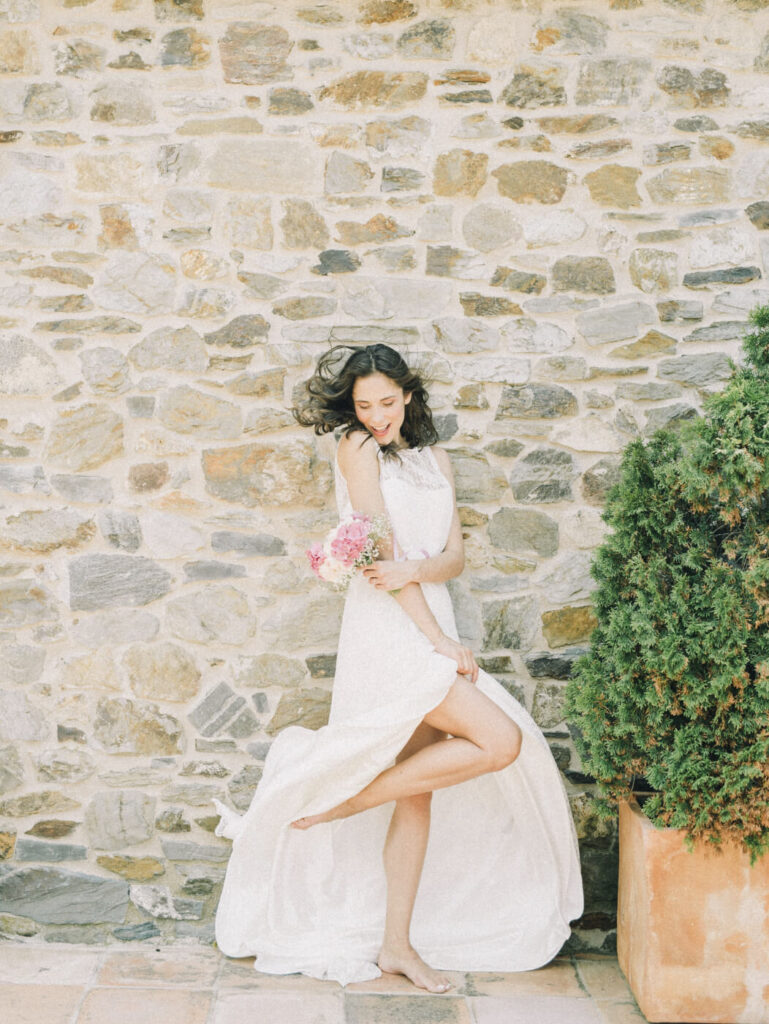
A wedding portrait schedule can look perfect on paper and still feel rushed in real life. The difference is not usually more posing or a longer shot list. It is knowing how to plan wedding portraits around the light, the pace of your celebration, and the people you most want beside you. When the timing feels generous, your photographs have room to feel like you: relaxed, present, and genuinely connected.
Begin with the feeling you want to remember
Before choosing a location or calculating minutes, consider how you want this part of the day to feel. Some couples dream of a quiet walk together after the ceremony, with only the sound of the wind and a few moments to take in the fact that they are married. Others want portraits full of movement, laughter, friends, and the energy of a city celebration.
Neither approach is more correct. Your portrait plan should reflect the rhythm of your wedding rather than interrupt it. If being away from guests for an hour would make you anxious, a shorter couple session plus a few sunset minutes may be ideal. If photographs are a central part of your experience, build the day around enough unhurried time to create them beautifully.
Share those priorities with your photographer early. A thoughtful photographer can shape the schedule around what matters most, whether that is a private first look, a relaxed cocktail hour, or the warm evening light over the Douro Valley.
Build your timeline from the light backward
Light gives wedding portraits their atmosphere. It influences skin tones, the softness of the background, the mood of a landscape, and how comfortable everyone feels outdoors. For this reason, portrait planning works best when you begin with sunset and work backward through the day.
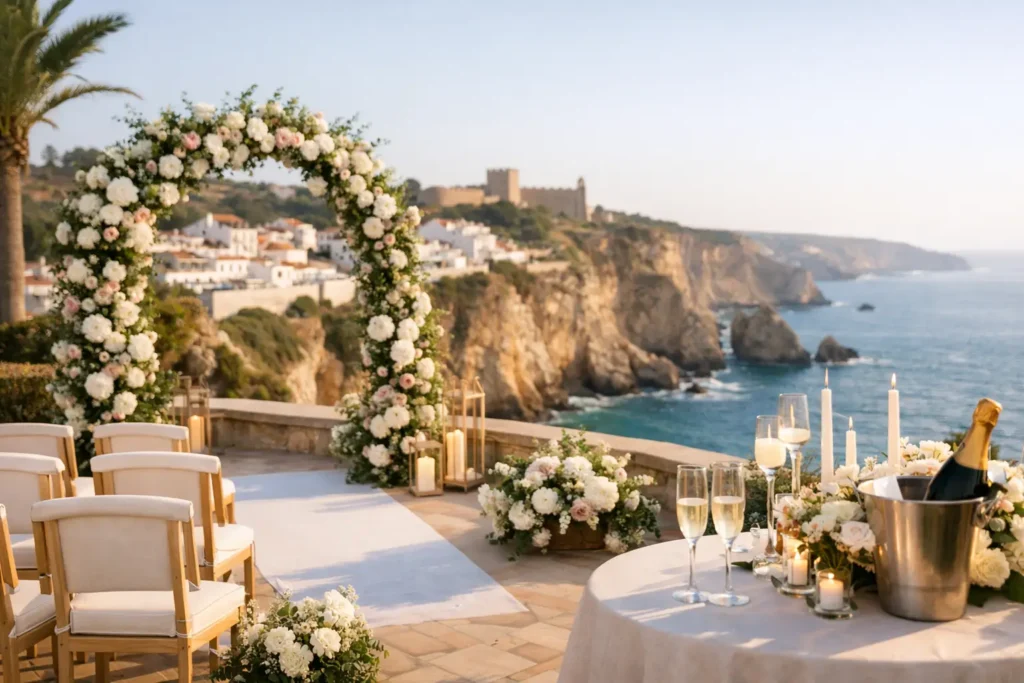
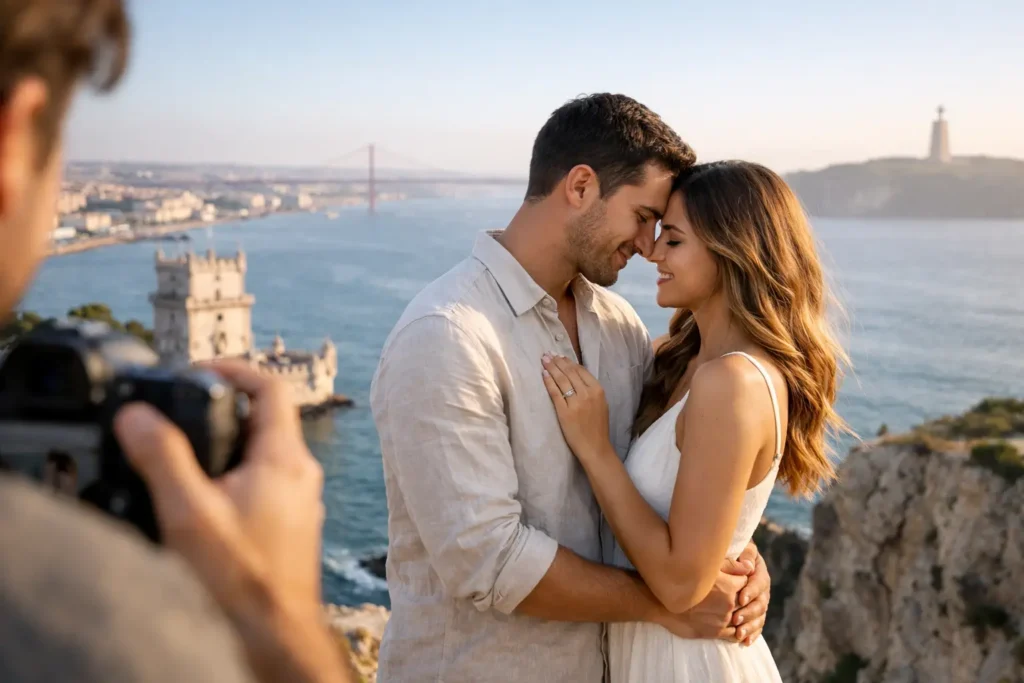
Golden hour, usually the last hour before sunset, is beloved for good reason. The light is lower, softer, and more flattering, with a warm glow that suits romantic portraits. It is especially beautiful in open places such as the Algarve coast, a vineyard, or a terrace overlooking Lisbon. But golden hour is not the only time for meaningful photographs. A cloudy afternoon can be wonderfully elegant, and shaded courtyards, historic interiors, and tree-lined paths can offer gentle light earlier in the day.
Ask your photographer for the expected sunset time for your wedding date and location. Then reserve 15 to 25 minutes near that window for just the two of you, if possible. This does not need to become a production. Often, it is simply a welcome pause between dinner courses or before the party begins.
Consider the season and the setting
Portugal’s light changes dramatically by season. Summer weddings may have late sunsets and intense midday sun, while spring and autumn can bring softer skies and earlier evenings. In the Algarve, bright coastal light often calls for shaded portrait locations during the middle of the day. In Porto or Lisbon, narrow streets, tiled facades, and grand architecture can create beautiful pockets of shade and texture.
A skilled local photographer will know where the light falls and how long it takes to move between locations. That knowledge protects your time and prevents the day from becoming a race from one viewpoint to another.
Decide whether a first look fits your day
A first look is a private moment before the ceremony when you see each other dressed and ready. It can be emotionally powerful, and it offers a practical advantage: many couple and wedding party portraits can happen before guests arrive.
For couples who want to join cocktail hour, a first look often creates the most breathing room. You might allow 20 to 30 minutes for the two of you, then another 20 to 30 minutes for wedding party and immediate family photographs. After the ceremony, you can enjoy your guests and step away briefly only for sunset portraits.
However, a first look is not a requirement. If you have always imagined seeing each other for the first time at the ceremony, honor that. Plan instead for a calm portrait window immediately afterward, ideally 30 to 45 minutes, before family photographs or cocktail hour. The trade-off is that you may miss part of the reception welcome, but the anticipation and emotional impact may be worth it.
Give each group its own realistic window
Trying to photograph every combination of relatives, friends, and wedding party members in one fast block is where many timelines lose their ease. Family formals need structure, but they do not need to feel formal in the final images.
Create a concise list of essential groupings before the wedding. Start with parents, siblings, grandparents, and anyone whose presence carries particular meaning. Keep it focused. A long list of individual combinations can easily turn ten minutes into thirty, especially when guests are congratulating you, moving between rooms, or looking for a missing family member.
Assign one organized person who knows the family well to help gather people. This small role is invaluable. Your photographer can focus on expression, composition, and making everyone feel comfortable while someone else finds Uncle David.
As a general guideline, allow 20 to 30 minutes for immediate family portraits and 15 to 20 minutes for the wedding party. Add more time if you have a large family, several children, limited mobility, or a ceremony and reception spread across different venues. A schedule with a little margin is far more elegant than one that expects perfection.
Choose locations for ease, not just beauty
A dramatic cliffside or historic palace may look irresistible, but a location has to work within the reality of your day. Consider walking distance, parking, guest access, privacy, wind, heat, and whether you would need to change shoes. The most beautiful location is not always the one farthest away.
Often, the strongest wedding portraits come from using a few considered spaces close to your venue. A quiet garden path, an architectural doorway, a room with beautiful window light, or a terrace at dusk can create variety without taking you away from your celebration for too long.
If you do want portraits in a separate location, build travel time into the timeline honestly. Include time to leave the venue, get in and out of the car, settle your dress, and return. Add a buffer for destination realities such as traffic, busy streets, or a popular viewpoint at sunset.
Plan for natural direction rather than a pose list
You do not need to arrive with dozens of saved poses. In fact, a rigid inspiration board can make couples feel as though they are performing rather than experiencing their wedding day. Your photographer should guide you with simple prompts and clear direction, then leave space for your real reactions to appear.
Tell them if you feel nervous in front of the camera, dislike a certain side of your face, or want photographs that feel editorial, candid, classic, playful, or quietly romantic. These details are useful. They allow your photographer to direct with care while keeping the images true to you.
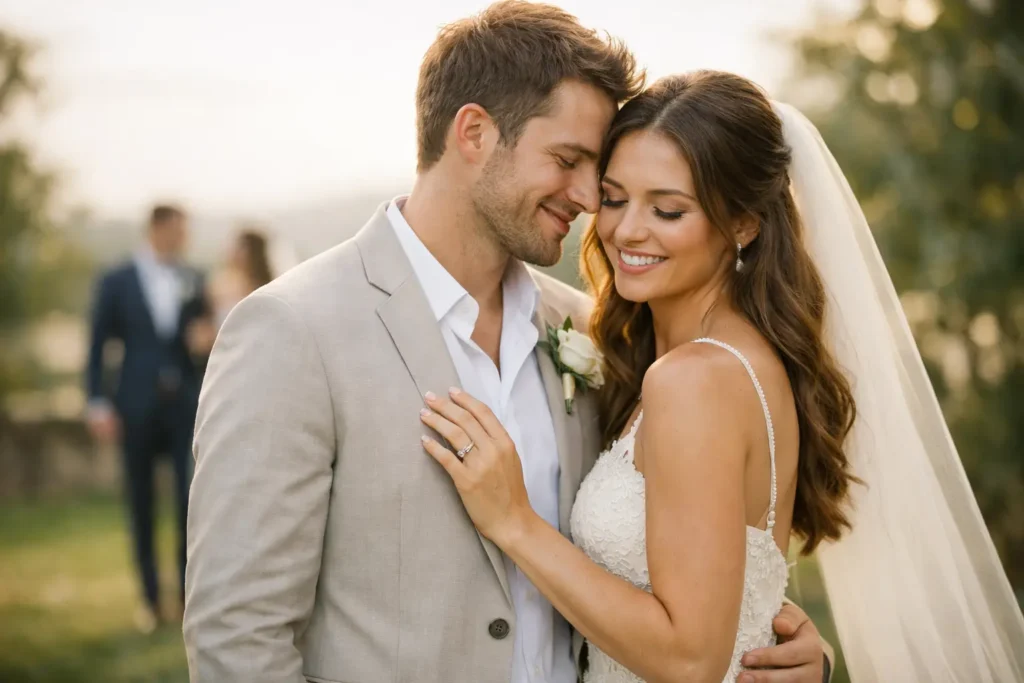
During portraits, focus less on the camera and more on each other. Walk slowly. Hold hands. Notice a detail you love about your partner. Take a breath before you move to the next location. The most lasting images often happen between the planned frames: a hand adjusting a veil, a shared look after a joke, or the relief of finally having a moment alone.
Protect the small pockets of time
Portraits do not only happen during the designated portrait session. Some of the most personal photographs can be made in the quiet moments around it: getting ready with family, fastening an earring, reading a note, waiting before the ceremony, or stepping outside for fresh air after dinner.
You can protect these moments by avoiding an overly packed morning. Leave enough time for hair and makeup to run slightly late, for a meal, and for getting dressed without an audience of vendors and relatives entering the room. If possible, keep the getting-ready space tidy near a window. It makes a meaningful difference in both the photographs and your state of mind.
At Wedding Photographer Portugal, we often encourage couples to treat their portrait time as a pause, not another task. It is one of the few points in the day when you can look at each other without needing to greet, host, or decide anything.
Leave room for the unexpected
Weather shifts, a ceremony runs late, a boutonniere disappears, or a beloved grandparent needs extra time. These things are normal, especially at a destination wedding. The goal is not to control every minute. It is to create a timeline with enough flexibility that a small change does not take away the joy.
Build in ten-minute buffers between major parts of the day. If rain is possible, ask about a beautiful covered option rather than treating it as a failure. Soft rain, mist, and overcast skies can bring remarkable mood to photographs, particularly when you are prepared and comfortable.
Your wedding portraits should not ask you to abandon your own celebration. Plan them with intention, trust the people guiding you, and give yourselves permission to slow down when the day finally arrives. The photographs will hold the beauty of the setting, but more importantly, they will hold the feeling of being there together.
Related Articles