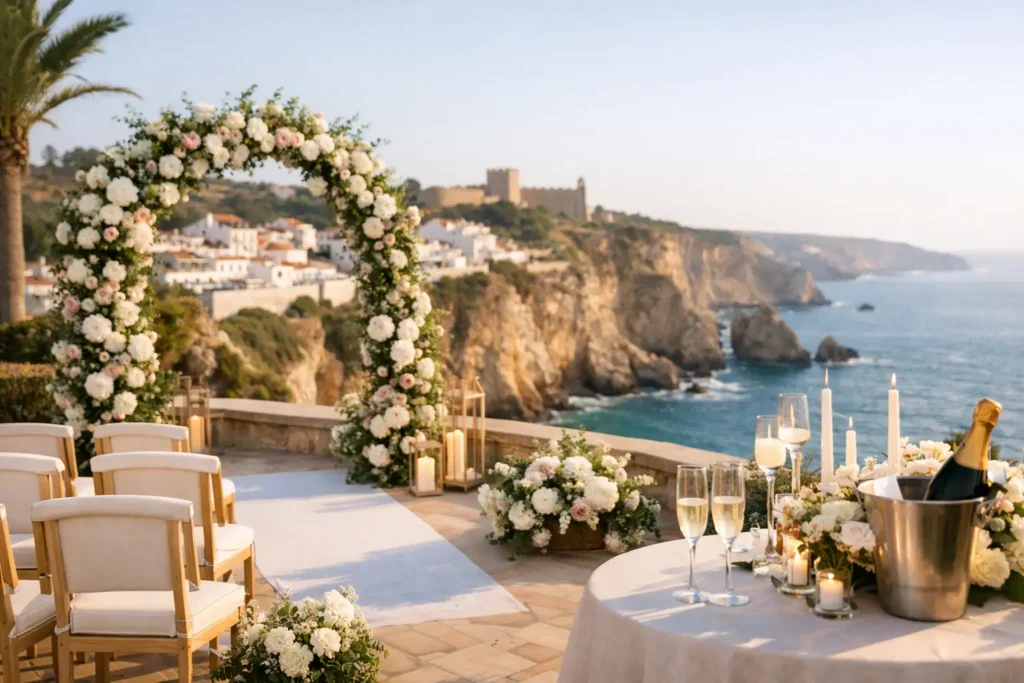
A sunlit ceremony in Portugal can feel impossibly beautiful: the Atlantic breeze moving through a veil, olive leaves catching the light, family members gathering beneath a pale blue sky. The best outdoor ceremony photo tips are not about turning that beauty into a production. They are about protecting the feeling of the moment while making a few thoughtful choices that allow your photographs to look natural, flattering, and entirely true to you.
An outdoor setting gives your ceremony a sense of openness that no indoor room can replicate. It also brings changing light, wind, uneven ground, and the occasional surprise from nature. With a little planning, those variables become part of the story rather than distractions from it.
Start With Light, Not Just the View
The view matters, of course. A dramatic coastline, vineyard terrace, or Douro Valley landscape may be the reason you chose your venue. But when selecting the ceremony position, consider where the sun will be during your vows, not only what sits behind the altar.
Direct overhead sunlight can create deep shadows beneath the eyes and make guests squint. When possible, plan for a ceremony later in the afternoon, when the light is softer and more dimensional. In the Algarve, where sunshine is often bright and clear, a ceremony held closer to sunset can feel gentler on the skin and more relaxed for everyone present.
If your timeline requires an earlier ceremony, look for open shade. A large tree, the side of a historic building, or a carefully placed canopy can soften harsh light without making the setting feel dark. The key is consistency. Patchy shade, where sunlight falls across only part of a face, is often more difficult to photograph than full sun.
Ask your photographer to review the ceremony area with you before the wedding day, ideally at a similar time of day. A location that looks perfect in a venue gallery at 7:00 p.m. may be facing intense sun at 2:00 p.m. This simple check can shape every image that follows.
Choose an Aisle That Lets the Story Unfold
Your entrance is one of the few moments when every guest is watching, and it deserves enough room to breathe. A wider, uncluttered aisle gives you space to walk naturally and allows your photographer to capture both the anticipation on your partner’s face and the people you love gathered around you.
Avoid filling the aisle edges with tall arrangements that block sightlines or leave little room for movement. Low floral meadows, grounded arrangements, or chairs set with a little breathing room tend to photograph beautifully. They frame the scene without competing with it.
Think about the direction you will face during the vows as well. If you stand with your backs to a spectacular view, your guests may love it, but your faces may be in shadow for most of the ceremony. A slight turn of the setup can preserve the landscape while keeping the light on you. It is often the smallest adjustment that makes the largest difference.
Give Your Photographer Clear, Discreet Access
Natural ceremony photographs rely on anticipation. Your photographer should be able to move quietly between a few planned positions, capturing the entrance, your expressions, your hands meeting, and the reactions unfolding among your guests.
This does not mean someone should be visible at every moment. It means your ceremony design should leave sensible paths around the chair rows and behind the altar area. A trusted photographer knows when to step forward and when to remain invisible, but tight furniture layouts can limit the angles available.
If you are working with a planner or venue coordinator, mention photography access during the final walkthrough. It is especially useful for cliffside venues, gardens, and historic estates where pathways may be narrow or where guests naturally gather close to the ceremony space.
Build a Timeline With Room for Real Moments
A rushed schedule is more noticeable in photographs than couples expect. When everyone is trying to reach the ceremony space at once, details are missed: a parent seeing you for the first time, a deep breath before walking down the aisle, the quiet squeeze of a hand.
Plan to be dressed and ready earlier than you think you need to be. This gives your photographer time to document the atmosphere without asking you to perform it. It also creates a buffer for wind, traffic, a missing button, or the normal unpredictability of a destination wedding day.
Consider whether a first look suits your day. For some couples, seeing each other privately before the ceremony creates a calm pocket of connection and allows more portrait time before guests arrive. For others, the anticipation of meeting at the aisle is central to the experience. There is no universally right choice. The best decision is the one that feels most meaningful to you and works honestly with the available light.
If your ceremony is near sunset, remember that daylight fades quickly. Set aside at least 15 to 20 minutes immediately afterward for just-married portraits. Those first minutes together are often among the most emotional of the day, and the softer evening light can be extraordinary.
Outdoor Ceremony Photo Tips for Wind, Weather, and Comfort
Weather is not a flaw in a wedding story. A little wind can bring movement to a veil, dress, or floral arrangements that makes an image feel alive. But comfort matters. If you are cold, overheated, or worried about rain, it becomes harder to stay present.
For a breezy location, choose a veil and hairstyle that can move gracefully rather than require constant fixing. Secure any meaningful accessories well, and speak with your florist about arrangements that can withstand the conditions. Heavy pedestal displays may be less practical than lower, stable designs in exposed spaces.
Have a graceful weather plan, even if the forecast looks perfect. A covered terrace, elegant tent, or nearby indoor option gives you confidence rather than anxiety. The most beautiful backup plan is one you would genuinely be happy to use. That peace of mind shows in your face.
Guests also photograph more naturally when they are comfortable. Offer water on warm days, provide shade when possible, and consider blankets or heaters for a late-season evening. When your people feel cared for, their reactions are open, warm, and present.
Keep Technology From Interrupting the Scene
An unplugged ceremony is one of the kindest gifts you can give yourselves. Phones and tablets held in the aisle can obscure faces, pull attention away from the vows, and place glowing screens in moments that should feel intimate.
A simple note in your welcome materials or a sign at the ceremony entrance is usually enough: invite guests to be fully present and let them know photographs will be shared afterward. The result is not only cleaner imagery. It is a room full of faces, tears, laughter, and eye contact instead of raised devices.
Audio deserves attention, too. Your vows may be soft, emotional, and difficult to repeat. A discreet microphone for the officiant or a sound recording arrangement can preserve the words behind the images. This is particularly valuable for elopements and intimate ceremonies, where every sentence carries weight.
Let the Ceremony Be Yours
The most enduring photographs do not come from a perfectly symmetrical setup or a flawless forecast. They come from the way you look at each other when the rest of the day falls away. Leave room in the ceremony for a reading that matters, a pause after your vows, a kiss that is not rushed, or a walk back down the aisle with the people you love cheering around you.
At Wedding Photographer Portugal, we believe gentle guidance should give you more freedom, not more pressure. Choose the light with care, create a plan that supports comfort, and then let yourselves feel the moment. Your story will do the rest.