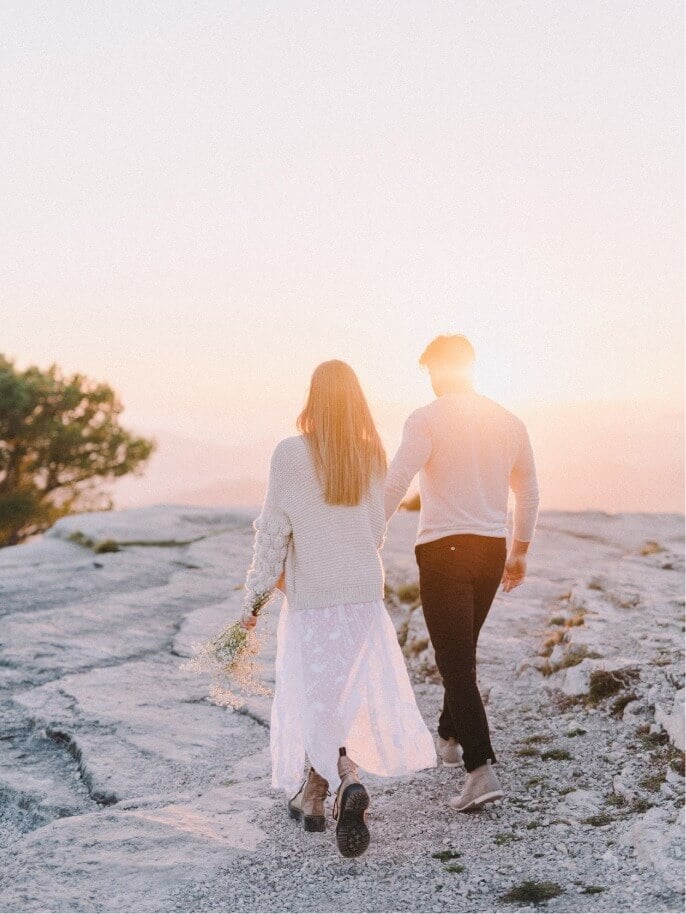
A wedding photograph can be technically perfect and still feel distant. The film photography trends couples are drawn to now answer that feeling with something more human: softened highlights, gentle grain, rich skin tones, and the quiet sense that a moment was truly lived rather than manufactured.
For destination weddings in Portugal, this aesthetic has particular resonance. Sunlight moving across old stone in Lisbon, candlelit dinner tables in the Douro Valley, wind along the Algarve coast, and the deep blue shadows of Porto all carry texture that film interprets with remarkable tenderness. But choosing a film-inspired look is not simply about selecting a fashionable edit. It is about deciding how you want your memories to feel when you return to them years from now.
Why film photography trends feel so personal
The renewed appreciation for film is often described as nostalgia, but that only tells part of the story. Film has a way of allowing light to remain light. Bright skies can feel airy rather than flat, shadow holds atmosphere rather than disappearing into black, and color has subtle variation instead of absolute uniformity. The result is often less literal and more emotional.
For couples who want natural wedding photography, this matters. A perfectly posed image can be beautiful, but an image of your hand reaching for your partner’s beneath a veil, or your parents laughing during a toast, carries its own kind of permanence. Film-inspired photography gives these unscripted gestures room to breathe. It does not require every frame to be polished into sameness.
There is also a welcome shift away from aggressively edited images. For several years, wedding galleries were shaped by extremely muted palettes, orange skin tones, or very dark exposure. Those styles can be striking in a single image, yet sometimes feel tied to a particular moment online. Current film photography trends favor balance: warmth without yellowing, softness without losing detail, and color that still honors the setting.
The wedding film aesthetic, beyond the grain
Grain is the visual cue most people notice first, but it is not the heart of the film aesthetic. Added carelessly, grain can make an image look muddy or artificially aged. Used with restraint, it lends texture and a sense of intimacy, especially in low-light moments such as a reception dance floor or a candlelit dinner.
More meaningful is the photographer’s relationship with light. Film-inspired work tends to welcome imperfect conditions rather than fighting them. A hazy afternoon, a slightly backlit ceremony, or a room illuminated by warm lamps can become part of the story. Instead of making every scene look equally bright and crisp, the photographs reflect how the day actually unfolded.
This does not mean sacrificing quality or relying on chance. A skilled photographer understands exposure, composition, and how to guide people toward flattering light. The difference is in the intention. The goal is not to remove every trace of reality. It is to shape reality with sensitivity.
Soft color is replacing washed-out color
One of the strongest trends is a return to nuanced color. Couples are choosing photographs with creamy whites, natural greens, warm neutrals, and blues that remain blue. This is especially valuable in Portugal, where the palette can range from terracotta streets and tiled facades to olive groves, ocean cliffs, and golden vineyards.
Soft color should not mean colorless. Your flowers, fashion, and chosen venue deserve to remain recognizable. If you have selected a silk gown with a particular ivory tone, a bouquet with seasonal depth, or a reception palette inspired by the coast, thoughtful editing should preserve those decisions. The most enduring galleries feel cohesive without turning every location into the same beige backdrop.
Direct flash is being used with more intention
Direct flash has returned, particularly for receptions and late-night portraits. It creates a vivid, editorial energy that feels spontaneous – a champagne glass lifted toward the camera, friends crowded together on the dance floor, a just-married couple slipping away for five minutes under the night sky.
The trade-off is that flash has a distinct personality. It is bolder than the soft, window-lit images many couples associate with film. When it is used throughout a gallery without variation, it can overwhelm quieter moments. When it appears at the right time, it gives the story a change of pace and captures the joyful disorder of celebration beautifully.
Motion and imperfection are becoming part of the composition
A slight blur in a moving veil, a guest crossing the edge of a frame, or the gentle tilt of a handheld photograph can create the feeling of being inside a memory. These images are not accidental substitutes for good technique. They are deliberate visual choices that make a gallery feel alive.
For a wedding day, movement is everywhere. Someone is always arriving, embracing, adjusting a dress, reaching for a hand, or dancing before the music changes. Photographs that allow for a little motion can honor that energy more honestly than images in which every detail has been frozen and controlled.
That said, a complete gallery needs stillness too. The best storytelling includes elegant portraits, clear family photographs, and quiet scenes where you can see the place you chose. The beauty lies in the contrast between a refined portrait and the blur of a joyful exit, not in making every image deliberately imperfect.
Film photography trends and the return of real moments
Another meaningful change is the move toward less performance. Couples still want guidance, especially when they feel nervous in front of a camera, but they are asking for prompts rather than rigid poses. They want to walk together, hold each other, look at the landscape, and have a moment to settle into the day.
This approach is well suited to elopements and destination celebrations, where the setting often becomes part of the emotional experience. A photograph on a cliffside or in a historic courtyard should not only prove that you were there. It should recall the wind, the anticipation, and the feeling of choosing that place together.
Authenticity does not mean a photographer steps back completely. Gentle direction creates space for genuine connection. It can help you stand well in the light, keep your hands relaxed, and forget the camera long enough for your expressions to become your own. The final images feel effortless because there was thoughtful care behind them.
Should you choose true film, digital, or a blend?
True analog film remains deeply appealing. Each roll has a physical presence, and its limitations can encourage a slower, more intentional approach. The colors and tonal transitions of film are difficult to imitate exactly because they are shaped by the stock, the light, scanning, and the small variations inherent in the process.
Digital photography, however, offers important reassurance on a wedding day. It performs reliably in rapidly changing light, allows greater flexibility during a fast-moving timeline, and provides extensive coverage of moments that cannot be repeated. For large celebrations, this can be especially valuable.
A hybrid approach often offers the most balanced experience. A photographer may document the day digitally for consistency and coverage, while incorporating film for selected portraits, details, or slower parts of the celebration. The decision depends on your priorities, your timeline, the lighting, and how much you value the unpredictability that makes analog imagery special.
At Wedding Photographer Portugal, the visual goal is never to follow a trend at the expense of your story. A refined film-inspired approach works best when it complements the atmosphere you have created and leaves space for real emotion.
How to make the look feel timeless
When speaking with your photographer, share more than a collection of saved images. Explain what you respond to in them. Perhaps you love soft morning light, editorial flash at night, natural skin tones, or photographs that feel quiet and cinematic. Those details are more useful than asking for a single preset or filter.
Consider your plans as well. An outdoor ceremony at midday calls for a different approach than a candlelit winter dinner. A tightly scheduled celebration may benefit from concise, well-guided portrait time, while an elopement can allow for a slower rhythm and more room for observation. Style is never separate from experience.
Most of all, choose photographs that leave room for feeling. Trends will continue to change, but the expression on your partner’s face as you walk toward them will not lose its meaning. The right visual language should bring you back to that moment with tenderness, clarity, and the beautiful truth of how it felt.
Related Articles