Wedding

How to Plan First Look Photos Without Rushing

A first look is not a performance for the camera. It is a small pause in a fast-moving day: the moment you see each other, fully dressed and about to be married, before everyone else asks for your attention. Knowing how to plan first look photos means protecting that pause while giving it enough light, privacy, and time to unfold naturally.

For destination weddings in Portugal, this can be especially meaningful. You may be getting ready in separate rooms at a Lisbon hotel, a quiet villa in the Algarve, or an old estate overlooking the Douro Valley. A thoughtfully planned first look lets you experience the beauty of the setting together before the celebration begins.

Decide whether a first look feels right for you

There is no rule that says you need a first look. Some couples dream of seeing each other for the first time at the ceremony, with their family and friends surrounding them. That anticipation can be powerful, and it is worth honoring if it feels true to you.

A first look tends to suit couples who want a more private emotional moment, who have a later ceremony, or who would rather complete most couple and family portraits before guests arrive. It can also ease nerves. Once you have held hands, laughed, cried, or simply taken a breath together, the ceremony often feels less like a grand entrance and more like the beginning of a celebration.

The decision is personal, not logistical. Let emotion lead, then use the schedule to support it.

How to plan first look timing

The most generous first-look schedule includes more than the reveal itself. Plan for about 20 to 30 minutes from the moment one partner is in position to the moment you move into portraits. That window gives you time to settle, have your reaction without interruption, and create a few natural photographs together afterward.

If you want to take wedding party and family photos before the ceremony as well, begin earlier. Most couples benefit from allowing 90 minutes to two hours before guests arrive for the first look, couple portraits, group photographs, and a small buffer for travel or touch-ups. The exact amount depends on the size of your family groups, the distance between locations, and the season.

In Portugal, summer ceremonies often happen later to avoid the strongest afternoon heat. A first look can make excellent use of the softer light earlier in the day, but it is wise to keep expectations flexible. In a bright courtyard or coastal setting, your photographer may choose open shade or an interior near a window rather than direct sun. Beautiful photographs do not require chasing one exact patch of light.

Build in a quiet buffer

A rushed first look usually feels rushed because the minutes before it were rushed. Hair and makeup delays are common, particularly when several people are getting ready in one space. Add 15 to 20 minutes of breathing room before the planned reveal, and treat it as protected time rather than extra time to fill.

Ask your planner, coordinator, or a trusted member of the wedding party to keep phones, bags, and unnecessary people out of the area. You should not be checking the transportation schedule or answering questions about boutonnières moments before you see each other.

Choose a location with privacy and feeling

The best first-look location is not always the grandest one. It is the place where you can be present with each other. Look for a setting with visual depth, flattering light, and enough privacy that you will not feel watched.

A shaded garden path, a quiet terrace, a stone corridor, or a room with large windows can all work beautifully. At a historic venue, consider an architectural corner away from guest arrival. At a hotel, a suite may offer a more intimate atmosphere than the lobby or main entrance. If you are marrying by the sea, choose a protected area with less wind and fewer passersby, then save the open shoreline for portraits afterward.

Privacy does not mean your photographer must disappear far away. An experienced photographer can give you space while still being close enough to preserve the expression, gestures, and small details that pass quickly. The goal is for the photographs to feel observed, not directed.

Plan the reveal simply

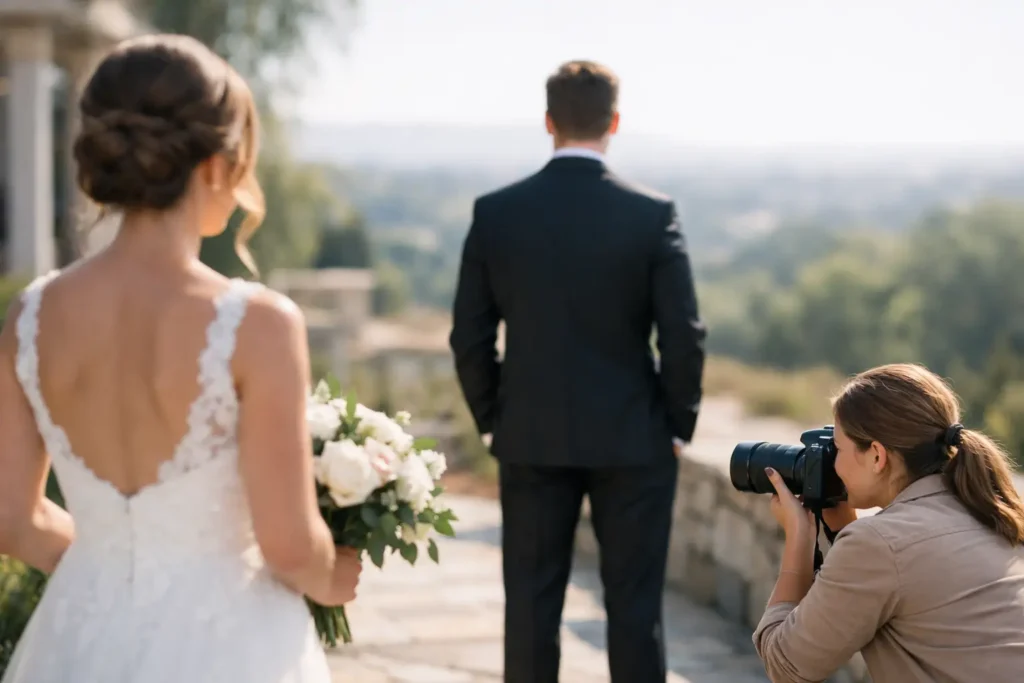
The classic arrangement is simple: one partner stands facing away while the other approaches, taps them on the shoulder, and they turn around. It works because it lets the moment unfold in a clear, unhurried way.

Still, there are other options if that setup feels too formal. You might walk toward each other from opposite ends of a garden path. You might meet around a corner, read private letters before turning, or hold hands back-to-back for a few breaths. For couples who dislike being the center of attention, standing together and looking out at the view before turning to one another can feel more natural.

Avoid over-choreographing the reaction. You do not need to promise tears, a speech, or a dramatic embrace. Real emotion comes in different forms. Some people cry immediately; others smile, laugh, become quiet, or take in details they did not notice until that moment. Every response is enough.

Think beyond the first look itself

A first look works best when it serves the flow of the whole day. Once you have seen each other, use the time intentionally. Begin with a few relaxed couple portraits while your clothes, flowers, and energy are fresh. Then, if you choose, bring in the wedding party and immediate family for group photographs before the ceremony.

This approach can give you more freedom after the ceremony. Instead of spending the entire cocktail hour on formal portraits, you may have time to greet guests, enjoy a drink, and let the evening begin with less pressure. That said, save 10 to 15 minutes for just the two of you later in the day. Sunset portraits are not about recreating the first look. They are a chance to step away, notice the changing light, and absorb the fact that you are married.

If your ceremony is very early, or if you feel strongly about keeping the traditional aisle reveal, you can still create a quiet portrait experience afterward. The right plan is the one that leaves room for both your values and the reality of the day.

Share the plan with the people who matter

Your photographer should know what you hope the first look will feel like. Tell them if you are nervous, if you want complete privacy, if there is a meaningful gift or letter involved, or if you would prefer minimal direction. A good photographer will shape the setup around your comfort rather than forcing a formula.

It also helps to tell your planner and wedding party what will happen and where they should be. Keep the circle small. If you want parents or close friends to watch from a distance, decide that in advance. If you do not, be clear that the moment is private. Boundaries are not unkind on a wedding day. They are how you make space for what matters.

At Wedding Photographer Portugal, we often encourage couples to think of the first look as a feeling rather than a shot list. The setting, timing, and photographs matter, but your attention belongs with the person in front of you.

When the moment arrives, resist the urge to rush toward the next part of the schedule. Hold each other for a little longer. Say what comes naturally. Look closely. The most lasting image may be the one you carry with you before the camera ever captures it.

Share
Wedding

How to Plan First Look Photos Without Rushing

A first look is not a performance for the camera. It is a small pause in a fast-moving day: the moment you see each other, fully dressed and about to be married, before everyone else asks for your attention. Knowing how to plan first look photos means protecting that pause while giving it enough light, privacy, and time to unfold naturally.

For destination weddings in Portugal, this can be especially meaningful. You may be getting ready in separate rooms at a Lisbon hotel, a quiet villa in the Algarve, or an old estate overlooking the Douro Valley. A thoughtfully planned first look lets you experience the beauty of the setting together before the celebration begins.

Decide whether a first look feels right for you

There is no rule that says you need a first look. Some couples dream of seeing each other for the first time at the ceremony, with their family and friends surrounding them. That anticipation can be powerful, and it is worth honoring if it feels true to you.

A first look tends to suit couples who want a more private emotional moment, who have a later ceremony, or who would rather complete most couple and family portraits before guests arrive. It can also ease nerves. Once you have held hands, laughed, cried, or simply taken a breath together, the ceremony often feels less like a grand entrance and more like the beginning of a celebration.

The decision is personal, not logistical. Let emotion lead, then use the schedule to support it.

How to plan first look timing

The most generous first-look schedule includes more than the reveal itself. Plan for about 20 to 30 minutes from the moment one partner is in position to the moment you move into portraits. That window gives you time to settle, have your reaction without interruption, and create a few natural photographs together afterward.

If you want to take wedding party and family photos before the ceremony as well, begin earlier. Most couples benefit from allowing 90 minutes to two hours before guests arrive for the first look, couple portraits, group photographs, and a small buffer for travel or touch-ups. The exact amount depends on the size of your family groups, the distance between locations, and the season.

In Portugal, summer ceremonies often happen later to avoid the strongest afternoon heat. A first look can make excellent use of the softer light earlier in the day, but it is wise to keep expectations flexible. In a bright courtyard or coastal setting, your photographer may choose open shade or an interior near a window rather than direct sun. Beautiful photographs do not require chasing one exact patch of light.

Build in a quiet buffer

A rushed first look usually feels rushed because the minutes before it were rushed. Hair and makeup delays are common, particularly when several people are getting ready in one space. Add 15 to 20 minutes of breathing room before the planned reveal, and treat it as protected time rather than extra time to fill.

Ask your planner, coordinator, or a trusted member of the wedding party to keep phones, bags, and unnecessary people out of the area. You should not be checking the transportation schedule or answering questions about boutonnières moments before you see each other.

Choose a location with privacy and feeling

The best first-look location is not always the grandest one. It is the place where you can be present with each other. Look for a setting with visual depth, flattering light, and enough privacy that you will not feel watched.

A shaded garden path, a quiet terrace, a stone corridor, or a room with large windows can all work beautifully. At a historic venue, consider an architectural corner away from guest arrival. At a hotel, a suite may offer a more intimate atmosphere than the lobby or main entrance. If you are marrying by the sea, choose a protected area with less wind and fewer passersby, then save the open shoreline for portraits afterward.

Privacy does not mean your photographer must disappear far away. An experienced photographer can give you space while still being close enough to preserve the expression, gestures, and small details that pass quickly. The goal is for the photographs to feel observed, not directed.

Plan the reveal simply

The classic arrangement is simple: one partner stands facing away while the other approaches, taps them on the shoulder, and they turn around. It works because it lets the moment unfold in a clear, unhurried way.

Still, there are other options if that setup feels too formal. You might walk toward each other from opposite ends of a garden path. You might meet around a corner, read private letters before turning, or hold hands back-to-back for a few breaths. For couples who dislike being the center of attention, standing together and looking out at the view before turning to one another can feel more natural.

Avoid over-choreographing the reaction. You do not need to promise tears, a speech, or a dramatic embrace. Real emotion comes in different forms. Some people cry immediately; others smile, laugh, become quiet, or take in details they did not notice until that moment. Every response is enough.

Think beyond the first look itself

A first look works best when it serves the flow of the whole day. Once you have seen each other, use the time intentionally. Begin with a few relaxed couple portraits while your clothes, flowers, and energy are fresh. Then, if you choose, bring in the wedding party and immediate family for group photographs before the ceremony.

This approach can give you more freedom after the ceremony. Instead of spending the entire cocktail hour on formal portraits, you may have time to greet guests, enjoy a drink, and let the evening begin with less pressure. That said, save 10 to 15 minutes for just the two of you later in the day. Sunset portraits are not about recreating the first look. They are a chance to step away, notice the changing light, and absorb the fact that you are married.

If your ceremony is very early, or if you feel strongly about keeping the traditional aisle reveal, you can still create a quiet portrait experience afterward. The right plan is the one that leaves room for both your values and the reality of the day.

Share the plan with the people who matter

Your photographer should know what you hope the first look will feel like. Tell them if you are nervous, if you want complete privacy, if there is a meaningful gift or letter involved, or if you would prefer minimal direction. A good photographer will shape the setup around your comfort rather than forcing a formula.

It also helps to tell your planner and wedding party what will happen and where they should be. Keep the circle small. If you want parents or close friends to watch from a distance, decide that in advance. If you do not, be clear that the moment is private. Boundaries are not unkind on a wedding day. They are how you make space for what matters.

At Wedding Photographer Portugal, we often encourage couples to think of the first look as a feeling rather than a shot list. The setting, timing, and photographs matter, but your attention belongs with the person in front of you.

When the moment arrives, resist the urge to rush toward the next part of the schedule. Hold each other for a little longer. Say what comes naturally. Look closely. The most lasting image may be the one you carry with you before the camera ever captures it.

Share

Leave a Reply

Your email address will not be published. Required fields are marked *