A beautiful wedding photograph rarely begins with a perfect pose. It begins with a small moment of connection: your hand finding your partner’s, a private laugh after the ceremony, or the quiet second before you walk into dinner together. When you know how to pose for wedding photos, the goal is not to look posed. It is to feel present, comfortable, and fully yourselves while your photographer shapes the light, setting, and composition around you.
For destination weddings in Portugal, this matters even more. A sweeping Douro Valley view, Lisbon’s soft stone streets, or an Algarve cliffside can be breathtaking, but the feeling in the image should still belong to the two of you. The most timeless portraits make room for both.
Pose for Wedding Photos by Focusing on Each Other
The simplest way to look natural in photographs is to stop performing for the camera. Instead of thinking, “What should I do with my face?” bring your attention back to your partner. Look at them, listen to them, touch them with intention. A skilled photographer will guide the overall shape of the image, then give you enough space for a real reaction to unfold.
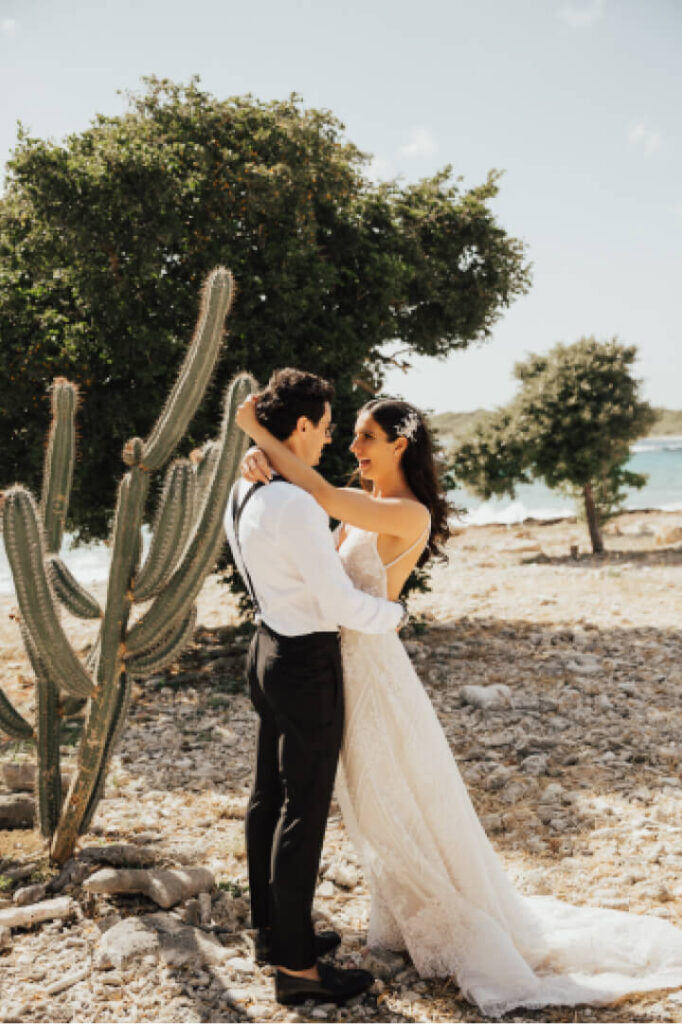
A close embrace often works best when it is not perfectly symmetrical. Stand close enough that your bodies are gently connected, then soften the pose by shifting your weight onto one leg. Let your shoulders relax. Bring your foreheads together, or turn toward one another as though you are about to say something no one else can hear.
Your hands deserve a little attention because they reveal whether a pose feels comfortable. Rather than pressing a palm flat against your partner’s chest or holding your bouquet tightly, use a light touch. Let one hand rest at the waist, collar, cheek, or forearm. The other can hold the bouquet naturally, gather part of your dress, or settle around your partner’s hand.
A good rule is simple: give every hand a gentle purpose. There is no need to make it theatrical.
Let movement do some of the work
Still portraits are beautiful, but movement often releases the nervous energy that makes couples feel stiff. Your photographer may ask you to walk slowly, with no need to look at the camera. Take small steps, stay close together, and focus on the rhythm of being side by side.
You might be asked to pause halfway through a walk, pull your partner in, or turn back toward them. These prompts create a moment rather than a fixed position. They also allow your clothing to move naturally, which is especially lovely with a veil, a flowing dress, or a windswept coastal setting.
Do not rush the movement. Slower usually photographs better. It gives you time to settle into each gesture and lets your photographer capture the natural transitions between poses, where some of the most honest expressions appear.
The Small Adjustments That Change a Portrait
You do not need to memorize angles before your wedding day, but a few simple adjustments can make you feel more confident.
First, avoid standing squarely toward the camera with equal weight on both feet. Turn your body slightly, then bring your face back toward the light or toward your partner. This creates shape without looking contrived. If you are standing together, try placing your hips a little closer than your shoulders. It naturally creates intimacy and prevents the feeling of two people simply standing beside each other.
For a flattering, relaxed posture, lengthen through your spine and allow your shoulders to drop. Think of growing taller rather than pulling your shoulders back. Keep your chin gently forward and slightly down when directed, particularly in close portraits. This gives the camera a more defined angle while preserving softness.
If you are worried about smiling on command, do not force one. Take a breath. Look at your partner. Think of a memory from your relationship or let yourselves talk for a moment. A quieter expression can be just as romantic as a broad laugh, and it often feels more like you.
Eye contact with the camera has its place, especially for a classic portrait or a photograph your family will love. But it should not be the only option. Looking at one another, looking down, or looking into the distance can create variety and allow the image to feel less formal.
What to do with a bouquet, jacket, or veil
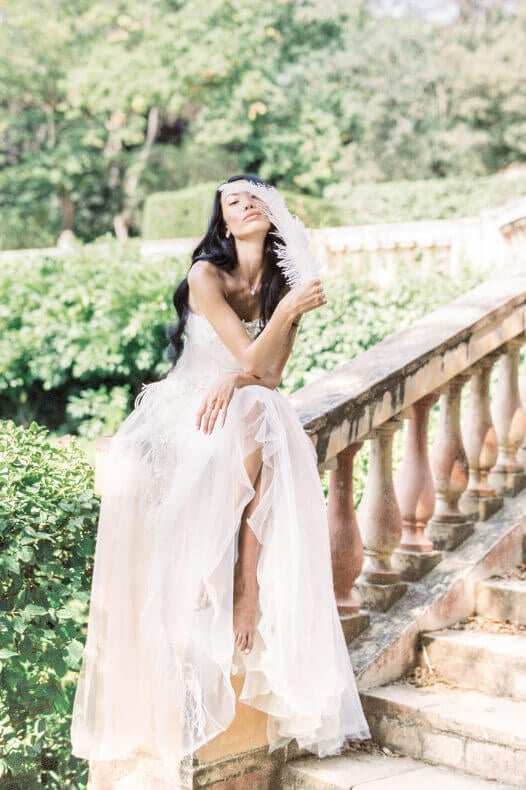
Wedding details can help a pose, as long as they are handled lightly. Hold your bouquet lower than feels instinctive, around the waist or just below it, so it does not conceal the shape of your dress. Angle it slightly rather than holding it straight toward the camera.
A jacket can be adjusted, held over a shoulder, or used in a walking portrait. A veil offers wonderful movement, but it should be treated as part of the atmosphere, not a prop you need to manage constantly. Your photographer may position it for a few frames, then encourage you to forget it is there.
For couples wearing more tailored attire, small gestures photograph beautifully: straightening a lapel, smoothing a sleeve, fastening a cuff, or holding hands while walking. These actions give the image a sense of anticipation and care.
Trust Direction, but Keep Your Own Rhythm
Many couples say they are not comfortable in front of the camera. Usually, that does not mean they dislike being photographed. It means they have not had someone guide them with clarity and kindness.
The best direction is specific enough to be useful and open enough to leave room for your personality. You may hear prompts such as, “Bring your hips closer,” “Walk toward the light,” or “Take a moment and tell each other how you are feeling.” These are not instructions to become someone else. They are gentle starting points.
If a pose feels unlike you, say so. Perhaps you prefer quiet closeness to playful spins, or you feel most at ease when you are walking rather than standing still. Your wedding photographs should reflect the energy of your relationship, not a trend that happened to look good elsewhere.
This is also why time matters. A rushed ten-minute portrait session can still produce lovely images, but it offers less space to settle in, explore a location, or let the emotion of the day reach the surface. When your schedule allows, plan a little breathing room after the ceremony or around sunset. In Portugal, the softer late-day light can be especially generous, and an unhurried pace makes a visible difference.
Prepare Before the Wedding Without Over-Practicing
You do not need a full rehearsal in front of a mirror. In fact, over-practicing can make you more self-conscious. What helps is choosing clothing that lets you move comfortably, making sure shoes are manageable for your portrait location, and telling your photographer anything that would help you feel supported.
If you have a side you tend to prefer, share it. If you are concerned about a feature, mention it without apology. An experienced photographer can choose angles, light, and pacing that honor your comfort while keeping the photographs genuine.
An engagement session can also be a lovely way to become familiar with the experience before the wedding day. You learn that you do not need to know what to do every second. You simply need to arrive willing to be close, to move, and to let the moment happen.
The Most Meaningful Pose Is the One You Forget
Wedding portraits are not a test of how well you can hold a position. They are a pause within a full, emotional day – a chance to step away together and notice what has just happened. The camera may remember the angle of your hands or the fall of your veil, but you will remember the feeling of being together.
Let your photographer guide the details. Keep your attention on the person you chose. When you do, your photographs will carry more than beauty: they will carry the unmistakable feeling of your wedding day.
Related Articles