Your engagement session should feel like an unhurried afternoon together, not a costume fitting. When deciding what to wear for engagement photos, the most beautiful choice is rarely the trendiest one. It is the outfit that lets you move easily, look like yourselves, and belong naturally in the place you have chosen to remember.
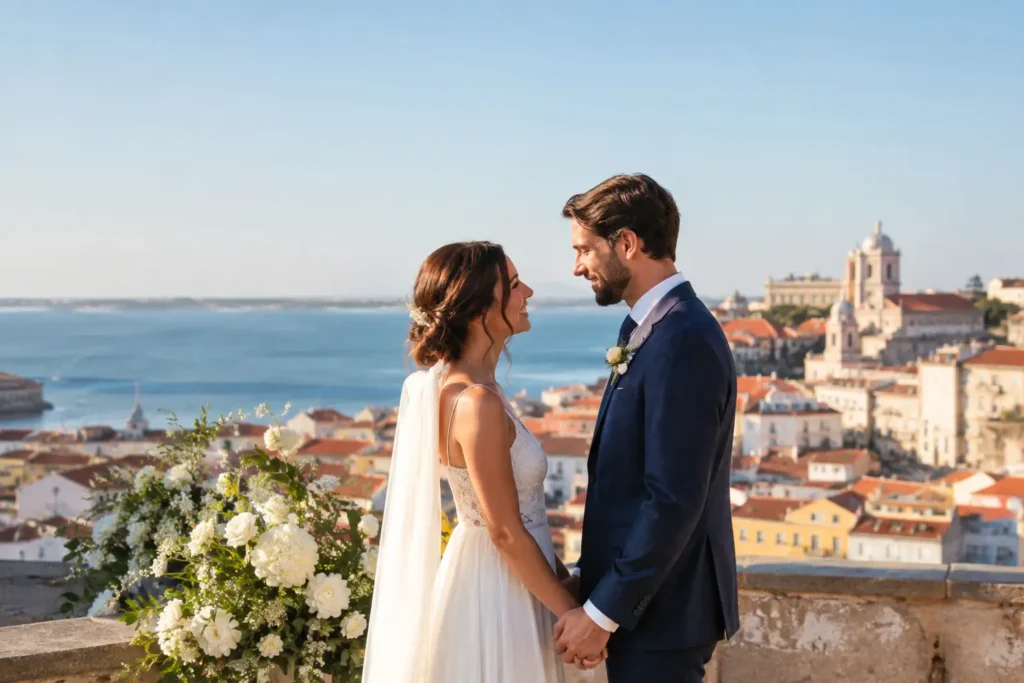
In Portugal, that place might be a tiled Lisbon street at blue hour, a windswept Algarve beach, a quiet garden in Porto, or the warm terraces of the Douro Valley. Each setting brings its own light, texture, and pace. Your clothing should complement that atmosphere without competing with it.
Start with the feeling you want to remember
Before choosing colors or shopping for anything new, consider how you want the photographs to feel. Soft and cinematic? Effortless and editorial? Playful, intimate, and sun-warmed? This is more useful than trying to match a single Pinterest image, because it gives your outfits a shared direction.
A flowing dress and an open-collar linen shirt can feel quietly romantic on the coast. A structured midi dress with tailored trousers may suit Lisbon’s elegant architecture. For an early-morning walk through Porto, relaxed layers can feel more personal than formal eveningwear. There is no single correct level of dressiness, but the two outfits should feel as though they belong in the same story.
One partner does not need to wear a gown simply because the other wears a suit. Balance is more about visual weight than identical formality. A refined knit dress can sit beautifully beside a well-cut jacket, just as a light skirt can pair naturally with a crisp shirt and trousers.
What to wear for engagement photos: choose movement first
Natural photographs depend on more than a photographer’s direction. They depend on clothing that allows you to walk, sit, hold each other, turn toward the wind, and forget about the camera for a moment. If you cannot lift your arms comfortably, take a full stride, or sit without adjusting your outfit, it will likely feel restrictive during the session.
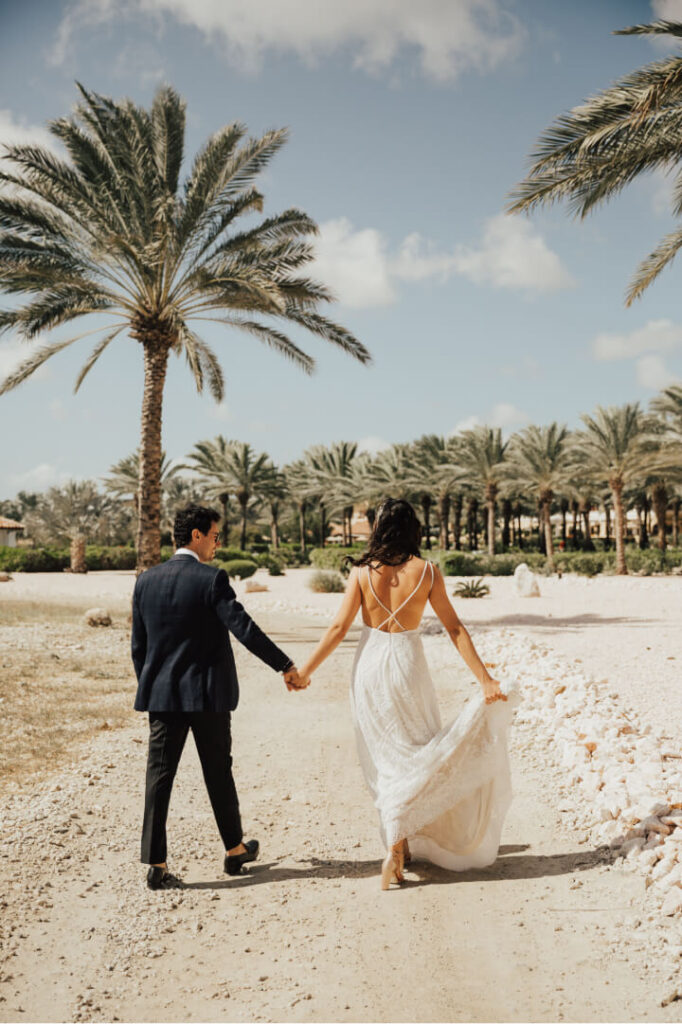
Choose fabrics with life in them. Linen, silk blends, cotton poplin, fine knits, chiffon, and softly draped crepe tend to photograph beautifully because they catch the breeze and respond gently to movement. A dress with a subtle skirt or wide-leg trousers can create shape without looking overly posed.
This does not mean every look must be loose or flowing. A fitted silhouette can be striking, particularly in a city setting, as long as it feels comfortable. The key is to avoid outfits that need constant pulling, smoothing, or checking. Confidence is visible in photographs, and comfort is often where it begins.
Let the location guide the practical details
Portugal offers extraordinary variety, and a beautiful outfit still needs to work with the ground beneath your feet. On cobbled streets in Lisbon or Porto, stilettos can turn a romantic walk into an exercise in concentration. Block heels, elegant flats, loafers, ankle boots, or a polished sandal are often better choices. If you love a higher heel for portraits, bring a second pair for walking between locations.
At the beach, consider how fabric behaves in wind and sand. A long dress can be wonderful, but very light fabric may need more attention on a breezy day. A shorter midi length, a shirt dress, or trousers with a beautiful top can offer the same ease with less fuss. Bare feet are lovely when they feel true to you, but they are not required for a coastal session.
In the Douro Valley, paths, vineyards, and warm late-day sun call for breathable fabrics and shoes with grip. In cooler months, a beautiful coat, tailored jacket, or textured knit can become part of the visual story rather than something to hide from the camera.
Build a color palette, not a matching uniform
Coordinating is more timeless than matching. Rather than wearing the same color or identical tones from head to toe, select a small palette with two or three complementary shades. This creates harmony while leaving room for individual style.
Muted, layered colors photograph especially well in Portugal’s changing light. Think ivory, warm white, sand, camel, soft blue, sage, dusty rose, terracotta, chocolate, charcoal, or deep olive. These shades sit beautifully against stone walls, ocean horizons, vineyard greens, and the faded blues and golds found throughout Portuguese cities.
Pure bright white can work, particularly for an elevated look, but it may appear stark in direct sun. Cream, ivory, or soft white usually holds more warmth and detail. Very neon colors, highly saturated logos, and busy graphics can pull attention away from your faces. The same is true of tiny, high-contrast patterns, which may look distracting at a distance.
If one of you wears a pattern, let it be gentle and give the other person a quieter solid color. Florals, subtle stripes, or textured fabrics can add dimension, but a single visual focal point is usually enough.
Think about the photographs in black and white, too
A timeless gallery includes more than color images. Strong black-and-white photographs depend on contrast, shape, and emotion. A navy shirt beside a cream dress, a dark jacket with a soft neutral skirt, or tonal layers in different textures can create beautiful depth when color falls away.
This is one reason neutral does not have to mean plain. Texture brings richness: linen against silk, knitwear beside cotton, suede with a matte dress fabric. These details are felt even when they are not immediately noticed.
Dress for the season, not the calendar fantasy
Many destination couples picture endless summer sunshine, yet Portugal’s weather can shift quickly depending on the region and time of year. A thoughtful wardrobe plan gives you options without weighing you down.
Spring can bring fresh green landscapes, softer light, and an occasional breeze or shower. Autumn often offers warm earth tones and gentler temperatures, though evenings may cool quickly. During summer, breathable materials matter, especially for sessions in Lisbon, the Algarve, or the Douro Valley. In winter, coastal wind and earlier sunsets make layers essential, and a well-chosen coat can look beautifully intentional.
Bring one practical layer that works with your look. A blazer, cardigan, scarf, wrap, or light coat gives you warmth between photographs and creates a simple way to vary the images. Avoid bringing a large collection of alternatives unless you have planned a two-look session. Too many choices can make the experience feel rushed.
Choose details that still feel like you
Accessories should add personality, not become a distraction. Delicate jewelry, an heirloom piece, a silk scarf, a meaningful watch, or a favorite pair of earrings can make your photographs more personal. Consider whether an accessory will make noise, catch awkwardly in hair, or need repeated adjustment. If it does, it may be better left behind.
Hair and makeup deserve the same philosophy: polished enough to help you feel confident, familiar enough that you still recognize yourselves. For outdoor sessions, a little extra definition can photograph well, but an entirely unfamiliar look may make you feel disconnected from the images later. If you are scheduling a makeup trial for your wedding, an engagement session can be a wonderful opportunity to see how it wears in natural light.
Do not forget the smaller details. Clean shoes, pressed clothing, lint-free jackets, and pockets emptied of phones or keys make a quiet difference. For rings, a quick clean before the session helps them catch the light in close photographs.
Consider one outfit or two
One outfit is often ideal for a shorter session or for couples who want an easy, documentary feel. It allows you to settle in without watching the clock. Two looks can work beautifully when there is enough time, a nearby changing option, and a clear reason for the change.
A popular approach is to begin in a more relaxed look while you warm up, then change into something a little more elevated for sunset. The trade-off is time: changing can interrupt the rhythm of the session, particularly when the best light is brief. If you choose two outfits, keep the second look simple to change into and make sure both work with the planned locations.
A final check before you leave
Try on your complete outfits together a few days before the session. Stand side by side in daylight, take a few phone photos, walk around, and sit down. This small rehearsal often reveals whether colors work well, whether a hemline needs attention, or whether a shoe choice is less practical than it seemed.
Most of all, choose clothing that gives you permission to be present with each other. The right outfit is not the one that takes over the photograph. It is the one that lets the light, the landscape, and the connection between you become the part you never stop seeing.
Related Articles