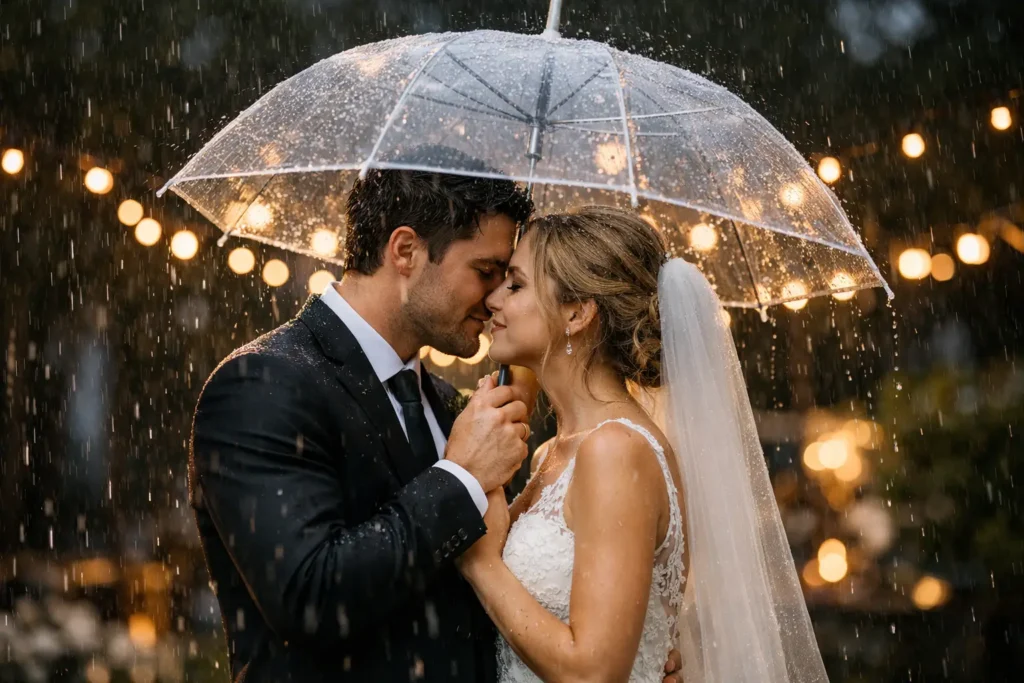
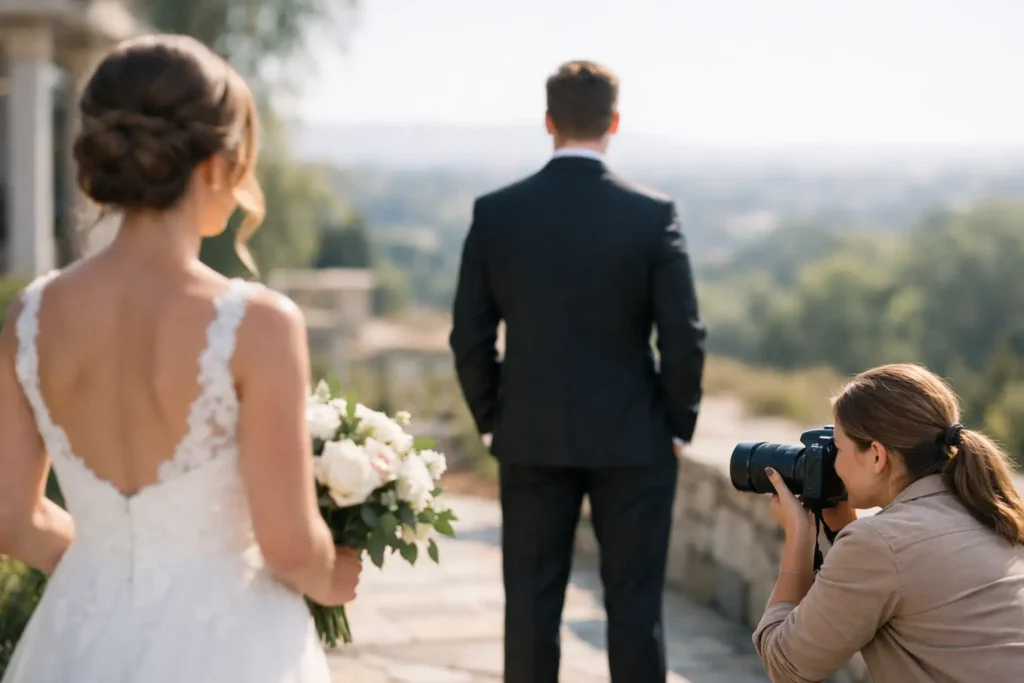
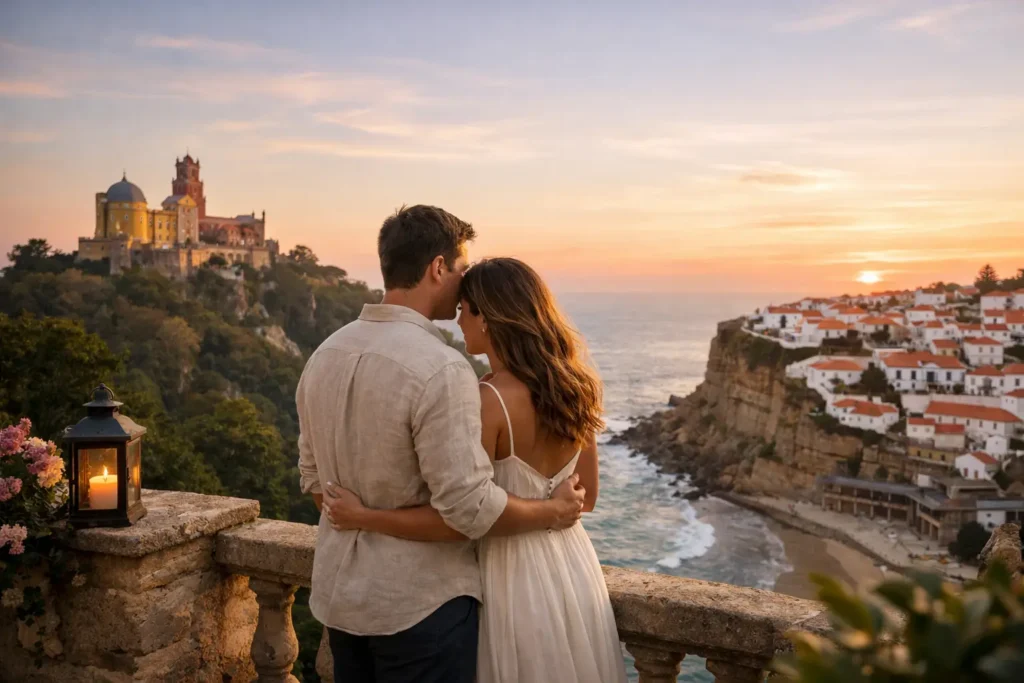
The most beautiful wedding photographs begin long before the first image is taken. They begin with clarity: a shared understanding of how your day will be held, documented, and protected. A thoughtful wedding photographer contract checklist helps you move from hopeful assumptions to calm confidence, especially when you are planning a celebration in Portugal from another country.
A photography contract should never feel cold or overly complicated. At its best, it is a caring agreement between you and the artist entrusted with your memories. It sets expectations around the practical details so that, on the wedding day, you can be present with each other rather than wondering what happens next.
Start With the Story of Your Day
Before looking at payment terms or legal language, make sure the contract accurately reflects the wedding you are planning. The couple’s full names, wedding date, venue or venues, and photographer’s business details should all be correct. This sounds simple, but destination celebrations often involve several locations: preparations in a Lisbon hotel, a ceremony in a historic chapel, and dinner somewhere entirely different. Every meaningful location should be accounted for.
The agreement should also name the type of event being photographed. A full wedding day, an intimate elopement, a multi-day celebration, and a proposal each require a different rhythm of coverage. If you have added a welcome dinner, rehearsal gathering, or day-after portrait session, confirm that it appears in writing rather than assuming it is included.
Wedding Photographer Contract Checklist Essentials
A contract does not need to predict every small moment. It does need to answer the questions that would matter if plans changed, timing slipped, or expectations differed. Read each section slowly, and ask for clarification before signing when a phrase feels vague.
Coverage hours and the meaning of “full day”
Look for a precise start and end time, along with the total number of hours included. “Full-day coverage” can mean different things to different studios. For one wedding, eight hours may be perfect. For another, a late dinner, sunset portraits in the Douro Valley, and a lively dance floor may call for ten or more.
Ask how additional time is handled. Is overtime available if the schedule runs behind? Is it charged in hourly increments? A clear answer gives you flexibility without an unwelcome surprise after the celebration.
Who will photograph your wedding
For couples drawn to a photographer’s particular eye, this is deeply personal. The contract should confirm the lead photographer who will attend, whether a second photographer is included, and what happens if illness or an unforeseen emergency makes attendance impossible.
A professional contingency plan is reassuring. It may include a trusted associate photographer, access to an experienced local network, and careful handover of your schedule and creative direction. The goal is not to expect something to go wrong. It is to know your story will still be cared for if it does.
Deliverables, editing, and delivery timing
Your agreement should describe what you will receive: edited high-resolution digital images, an online gallery, print options, albums, or any other products included in your collection. If an approximate image count is stated, understand whether it is a guarantee or an estimate based on the flow and length of the day.
Editing deserves attention as well. Photography is more than pressing a shutter; the finished work reflects a consistent artistic approach to light, color, composition, and emotion. A contract may state that the photographer retains creative discretion in editing and image selection. That is normal, provided you have already chosen a portfolio whose feeling you genuinely love.
Confirm the expected gallery delivery window and whether preview images will be provided. During peak wedding season, a beautiful final gallery takes time. Knowing the anticipated timeline lets you enjoy the anticipation without unnecessary uncertainty.
Payment schedule and additional costs
The contract should show the total investment, booking retainer, remaining balance, due dates, accepted payment methods, and any applicable taxes. It should also explain whether the retainer is refundable, transferable, or credited if your date changes.
For a destination wedding, read the travel section with particular care. Some collections include travel within a defined region, while others require separate costs for transportation, accommodations, parking, venue access, or flights. Neither approach is inherently better. What matters is that the terms are clear enough for you to build an honest budget.
If your wedding is outside the photographer’s home area, ask whether travel costs are fixed, estimated, or billed after the event. Fixed pricing offers certainty. Estimated expenses may offer flexibility, but should include sensible boundaries and approval expectations.
Postponement, cancellation, and force majeure
Even the most carefully planned celebration can change. Weather, travel disruptions, family circumstances, or venue decisions may require a new plan. Your contract should explain how postponements work, including whether the photographer will first try to transfer the retainer to a new available date.
Cancellation terms should state what happens to payments already made and what is owed if a cancellation occurs close to the wedding. There should also be a force majeure clause covering serious events beyond either party’s control, such as natural disasters, government restrictions, or significant travel interruptions.
These clauses are not a sign of pessimism. They are part of responsible planning, particularly when guests, vendors, and couples are traveling across borders.
Image rights and personal privacy
Most photography contracts distinguish between copyright and personal usage rights. In many cases, the photographer retains copyright, while you receive permission to download, print, share, and enjoy your images for personal use. Commercial publication, selling images, or extensive alterations may require separate permission.
Also consider portfolio and social media use. Many photographers reserve the right to share selected images for their website, editorial submissions, or social channels. If privacy matters to you – perhaps because of a high-profile role, a private family situation, or simply personal preference – raise it before booking. A respectful photographer will explain the available options, which may include a privacy fee or an agreement not to publish identifiable images.
Meals, access, and working conditions
This detail is easily overlooked, but it affects the photographer’s ability to work well through a long day. Contracts commonly request a vendor meal for coverage extending over several hours. Ideally, the photographer eats during the couple’s meal or another quiet moment, not during first dances, speeches, or a planned surprise.
The agreement may also address access restrictions at religious venues, museums, estates, or private properties. Some locations limit flash, movement, drones, or the areas where vendors may stand. Share these rules as early as possible. In return, your photographer can plan for beautiful imagery that respects the space and the ceremony.
Equipment failure and image backup
No couple wants to imagine a technical problem, yet this is one of the clearest signs of professional preparation. Ask whether the photographer uses backup camera bodies, lenses, memory cards, and redundant image storage. A contract may limit liability in the rare event of equipment failure or image loss, but it should sit alongside a visible commitment to prevention.
A photographer who arrives prepared, backs up files promptly, and maintains reliable equipment protects more than photographs. They protect your peace of mind.
Questions Worth Asking Before You Sign
A contract cannot replace a real conversation. If you are planning from the United States or elsewhere abroad, schedule time to talk through the details rather than relying only on email. Ask whether your timeline allows enough space for natural portraits, how the photographer handles harsh midday light, and whether a second photographer would genuinely benefit your guest count and schedule.
It is also wise to ask what the photographer needs from you. A family photo list, venue coordinator contact, transportation plan, and a clear understanding of your priorities can make the day feel effortless. If candid moments matter more than formal portraits, say so. If you are nervous in front of the camera, say that too. The best direction is gentle, attentive, and shaped around who you are together.
Read for Clarity, Not for Reasons to Worry
A strong contract is specific without being intimidating. It should make you feel more informed after reading it, not less. If a term feels confusing, request a plain-language explanation. If you want to adjust a detail, ask before the agreement is signed and the date is reserved.
For legal questions involving your particular circumstances, local requirements, or a cross-border agreement, consider seeking advice from a qualified legal professional. Your photographer can explain their own policies and process, but legal guidance should come from the right source.
Once the details are settled, let the contract do its quiet work in the background. Your attention can return to the things that deserve it most: the people arriving from far away, the light over the landscape, the vows you will remember forever, and the person waiting to meet you at the end of the aisle.