Before the ceremony begins, the day can feel wonderfully full: final touches, family arrivals, music drifting through the venue, and the quiet realization that you are about to get married. A first look creates a small pause within all of that energy. This wedding first look guide is here to help you decide whether that pause belongs in your day and, if it does, how to make it feel like you.
A first look is not a performance for the camera. At its best, it is a private meeting between the two of you before the ceremony, with space to take in what is happening, hold each other close, and let the emotions arrive naturally. The photographs are simply a record of that honest moment.
What a Wedding First Look Really Feels Like
One partner waits while the other approaches, usually from behind. When they turn around, there is no script to follow. Some couples laugh immediately. Some become quiet. Some cry, and some are simply relieved to finally be together. All of those reactions are real, and all are beautiful.
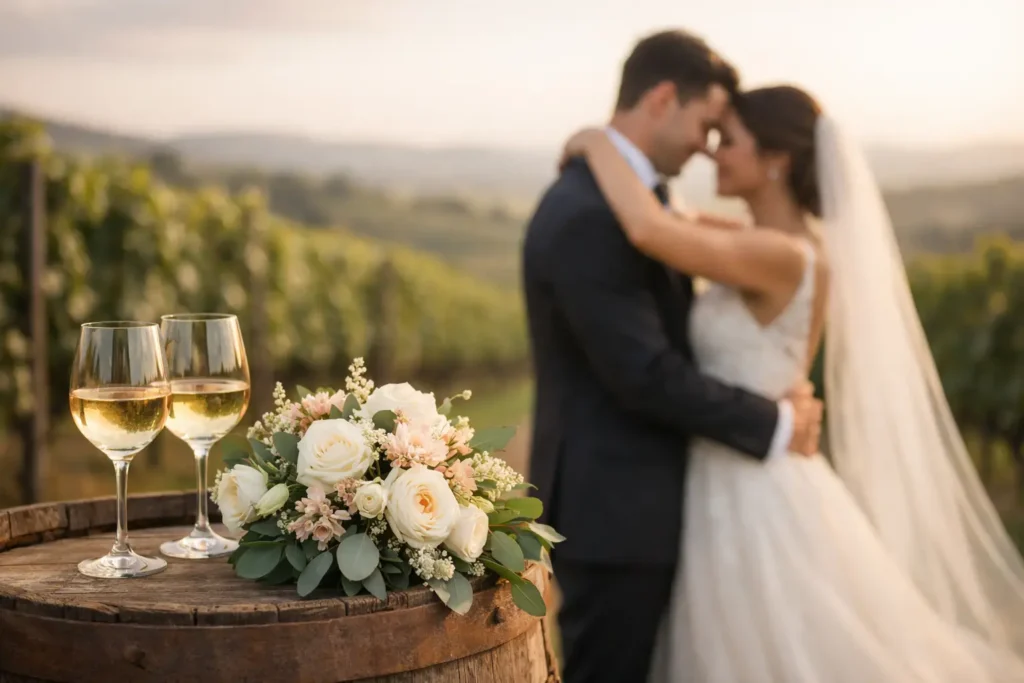
For destination weddings, a first look can be especially meaningful. You may be getting ready in separate rooms at a historic Lisbon hotel, a quiet villa in the Algarve, or overlooking the vineyards of the Douro Valley. You have traveled far, gathered people you love, and planned countless details from abroad. Seeing each other before the ceremony gives you a moment that belongs only to the two of you before the celebration opens outward.
It is also worth saying what a first look is not. It does not replace the ceremony entrance, make that entrance less meaningful, or require dramatic tears. The ceremony carries its own emotion because you are meeting in front of the people who have come to witness your commitment. The first look is simply a different kind of memory: intimate rather than public.
Is a First Look Right for You?
There is no universally correct choice. The right decision depends on the pace you want for your wedding day, the traditions that matter to you, and the way you naturally experience meaningful moments.
A first look often suits couples who value privacy, prefer a calmer timeline, or feel nervous about being the center of attention. If you know you will want a few minutes to speak freely, adjust to the emotion of the day, and settle into each other’s presence, it can be a beautiful choice.
It can also make practical sense. Meeting before the ceremony allows time for couple portraits, wedding party photographs, and family groupings earlier in the day. After the ceremony, you may be able to join your cocktail hour sooner rather than spending a large part of it away from guests. This is particularly helpful when the best light arrives close to sunset and your reception schedule is full.
On the other hand, some couples feel deeply connected to the tradition of seeing each other for the first time at the aisle. They want that anticipation, and they want their family and friends to share the reveal. If that vision feels true to you, honor it. You can still create a private moment before the ceremony without seeing one another. Hold hands around a doorway, exchange letters, or speak from opposite sides of a garden wall. The emotional connection is not limited to one format.
How to Plan a First Look That Feels Natural
The most moving first looks are rarely the most complicated. A thoughtful location, enough time, and a little protection from the day’s busyness are usually all you need.
Choose a setting with privacy and beautiful light
Look for a place that feels calm rather than overly grand. A shaded courtyard, a quiet terrace, a garden path, or a window-lit room can work beautifully. In Portugal, the soft stone walls and tiled details of a historic venue can give the scene character without distracting from your connection.
Privacy matters more than perfection. A spectacular viewpoint may be less suitable if tourists, vendors, or arriving guests are constantly passing through. Your photographer can help identify a setting that photographs elegantly while allowing you to stay present with each other.
Build in more time than you think you need
A first look itself may take only a few minutes, but the experience should not feel rushed. Allow time to walk into position, take a breath, embrace, and let the moment unfold. Plan roughly 20 to 30 minutes for the first look, including a few relaxed portraits immediately afterward.
This buffer is valuable if hair and makeup run late, transportation takes longer than expected, or emotions simply need room. A calm timeline creates better photographs because it allows you to forget about the schedule for a while.
Keep the reveal simple
You do not need to choreograph your response. Usually, one partner stands facing away while the other approaches quietly, touches their shoulder, or says their name. Then you turn around.
If you feel self-conscious, give yourselves something small to do after the embrace. Read private vows, exchange a letter, or take a short walk together. These gentle actions can help you relax and create photographs with movement and meaning, rather than leaving you wondering where to place your hands.
Tell the right people, but not everyone
Your planner, photographer, and the people responsible for getting you dressed should know the plan. Beyond that, keep the group small. The more people gathering nearby, the easier it is for a private moment to become an audience event.
If parents or a few close friends would genuinely add comfort, invite them to watch from a respectful distance. But choose this only if it feels good to you, not because you feel obliged to include everyone.
What Your Photographer Does During a First Look
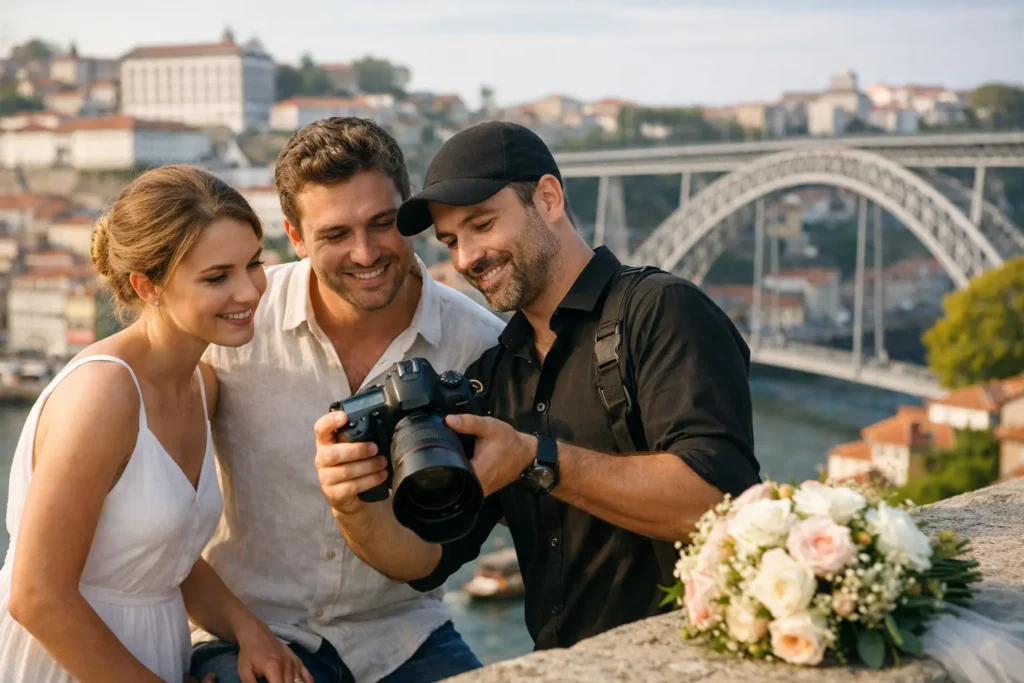
A sensitive photographer knows when to offer direction and when to step back. Before the moment begins, we help with the practical details: where to stand, where the light falls, and how to approach without rushing. Once you are together, the goal is to give you room.
You should not feel asked to repeat a reaction or recreate an embrace. Real moments cannot be improved by forcing them. Instead, a photographer will observe the details that naturally emerge: a hand reaching for a veil, a laugh through tears, the way you look at each other when no one else is speaking.
After the reveal, it is often the ideal time for portraits because your emotions are close to the surface and you are already connected. Rather than beginning with formal poses, your photographer can guide you into simple movement: walking, talking, holding each other, or taking in the view. The result feels less like a photo session and more like a few quiet minutes together.
First Look Timeline Ideas for Destination Weddings
The timing of a first look depends on your ceremony hour, travel between locations, and the season. Portugal’s summer sun can be bright and warm in the afternoon, so a shaded first-look location may be more comfortable than an open terrace. In spring or fall, the light is often gentler, but weather and earlier sunsets deserve attention.
If you are having a late-afternoon ceremony, consider a first look two to three hours beforehand. This can leave room for portraits in flattering light, a short rest before guests arrive, and less pressure after the ceremony. If you prefer to keep most portraits for sunset, a first look can still happen earlier as an emotional moment, followed by a brief sunset walk later in the day.
For an elopement, the timeline can be even more flexible. You might meet for a first look before a private ceremony in a vineyard, on a coastal path, or in the streets of Porto before the city fully wakes up. With fewer logistics, you can let the location and the rhythm of the day guide you.
A Few Concerns Couples Often Have
Many couples worry that a first look will take away from the aisle moment. In experience, it usually does the opposite. You have already shared a private release of emotion, so when you see each other at the ceremony, you can be more present with your guests and the promises you are making. The feeling changes, but it does not disappear.
Others worry that they will not react in a dramatic way. There is no expected response. A wide smile, a long hug, nervous laughter, or a quiet look can all hold enormous meaning. Your photographs should reflect your relationship, not someone else’s idea of romance.
Finally, some couples fear that a first look will make the day feel too scheduled. It can, if it is squeezed between too many obligations. Give it breathing room, choose a peaceful setting, and treat it as part of the experience rather than another item to complete.
Whether you choose a first look or save that first sight for the aisle, make room for one unhurried moment together. Years from now, you may remember the flowers and the view, but you will remember most clearly how it felt to find each other in the middle of it all.