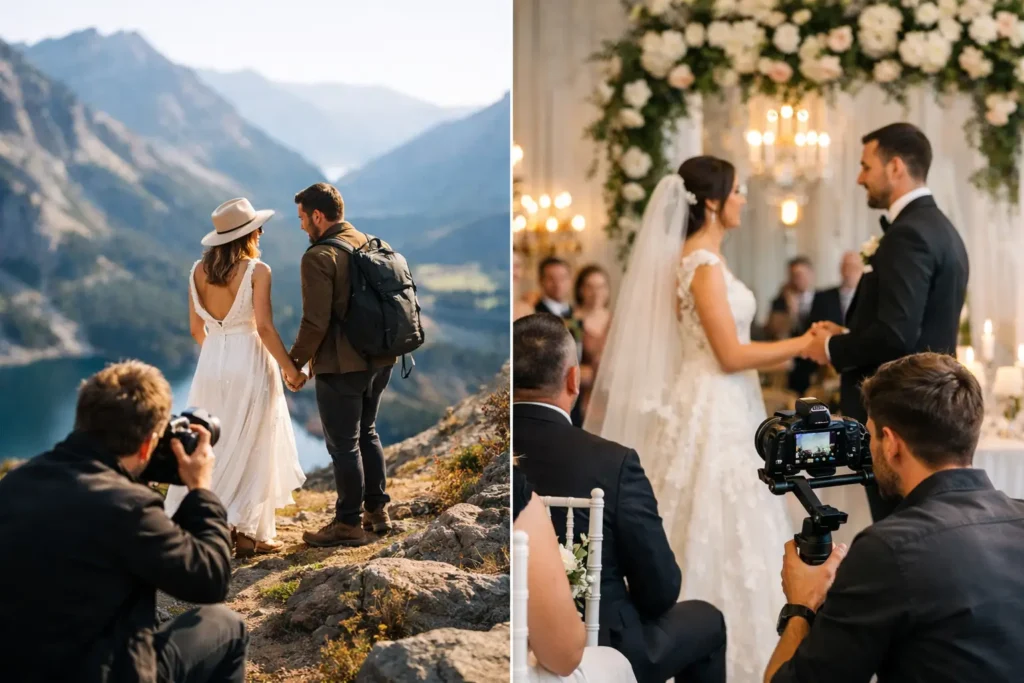
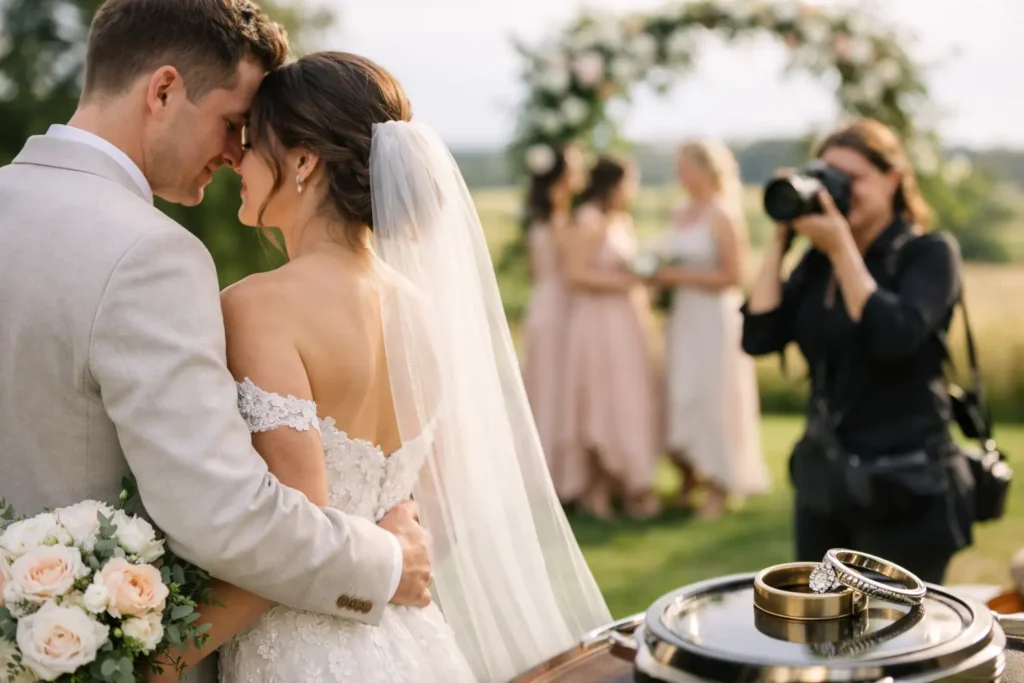
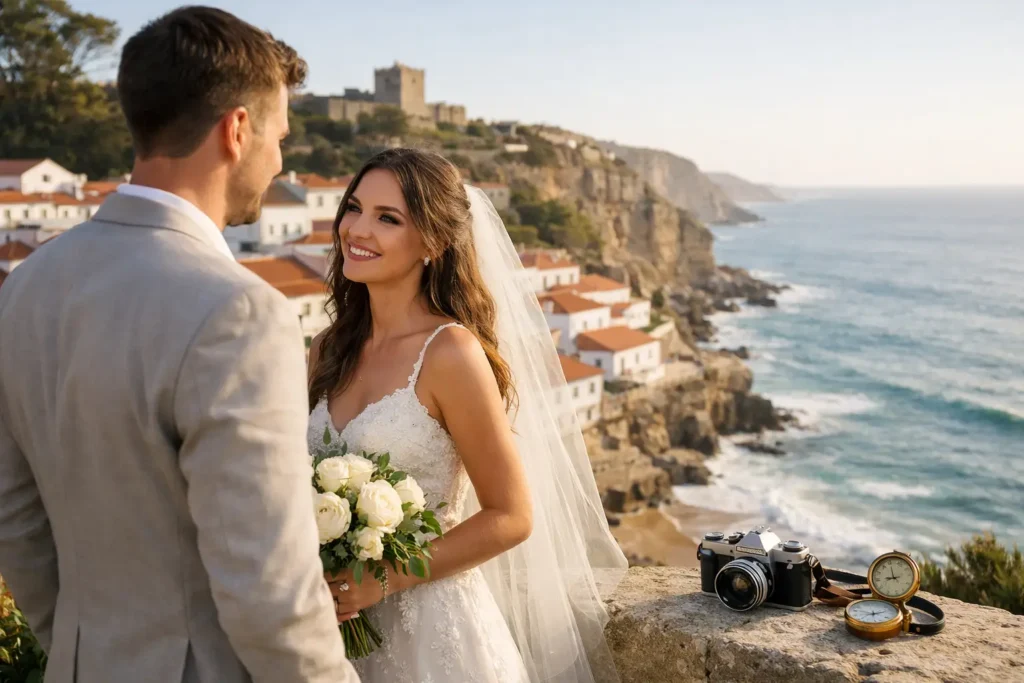
A quiet first look beneath Lisbon’s tiled walls, vows overlooking the Douro Valley, or sunset portraits on an Algarve cliff can feel beautifully spontaneous. Yet the most effortless images are often supported by thoughtful preparation. This wedding photo permits guide explains how to protect your plans, respect Portugal’s remarkable locations, and keep the focus where it belongs: on the two of you.
When Do You Need a Wedding Photo Permit in Portugal?
There is no single permit that covers all wedding photography in Portugal. Whether permission is needed depends on the location, the scale of the celebration, how the space is used, and the rules of the organization responsible for it.
A privately booked wedding venue will usually include photography as part of your event agreement. Even then, it is wise to confirm the details. Some estates limit access to particular gardens, terraces, historic rooms, or ceremony spaces. Others have rules around flash, lighting stands, confetti, candles, or portrait sessions after the reception has ended.
Public places are more nuanced. A brief, low-impact portrait session in a public street may be treated differently from a wedding party with extensive equipment, reserved space, styling teams, music, or a large guest group. Municipal authorities may require authorization when an activity affects public access or has a commercial character. Historic monuments, protected landscapes, museums, palaces, beaches, and gardens can each have their own procedures.
The guiding principle is simple: if a location is central to your vision, do not assume that beautiful means freely available. Ask early, receive written confirmation, and build your photography plan around the answer.
The Locations That Most Often Require Planning
Portugal offers extraordinary variety within a small geography, but its most recognizable places are also the ones most likely to have restrictions. Historic sites may regulate photography to protect fragile interiors, preserve visitor flow, or maintain the atmosphere of a cultural landmark. A permit, entrance fee, guided access requirement, or advance booking may apply even if your wedding itself is elsewhere.
Natural settings require equal care. Beaches can fall under local or environmental management rules, particularly when a setup occupies space or takes place during busy seasons. Coastal paths, dunes, national parks, and protected areas may limit where guests can gather and where equipment can be placed. The same is true of vineyards and river viewpoints in the Douro Valley, where private land and working agricultural schedules matter.
In cities such as Porto and Lisbon, public squares, waterfronts, gardens, and narrow historic streets are alive with residents and visitors. A small couple session may be possible without disrupting anyone, while a large group portrait may need coordination. Timing can be as valuable as a formal permit here. An early-morning session often gives you softer light, calmer streets, and more room to be present with each other.
Private venues still need clear questions
Before signing a venue contract, ask whether your photographer may work throughout the property and whether there are restrictions during the ceremony or dinner. Confirm the policy for flash inside historic rooms, use of a second photographer, and access for portraits at sunset.
It also helps to ask who communicates with the photographer on the wedding day. A venue coordinator who understands your timeline can make the difference between rushing through portraits and having ten unhurried minutes in the most beautiful light.
Start the Permit Conversation Earlier Than You Think
For a destination wedding, the practical challenge is usually not completing a form. It is allowing enough time for replies, clarifications, payment steps, and changes to a location’s seasonal schedule. Begin the conversation as soon as you have a preferred date, approximate guest count, and a clear idea of what you hope to photograph.
The person or office responsible for the location will usually want to know the date and time, number of people attending, exact areas requested, and whether the session involves commercial photography. They may also ask about equipment, including tripods, lighting, chairs, arches, floral installations, or signage. Be open and specific. A simple portrait session should be described simply, while a larger elopement ceremony deserves a fuller explanation.
Written approval matters, especially when you are traveling from abroad. Save the authorization, receipt, and any conditions in one shared folder with your planner, venue, and photographer. If there is a designated contact or approved arrival time, include it in the final wedding-day timeline.
What Your Photographer Can Help You Prepare
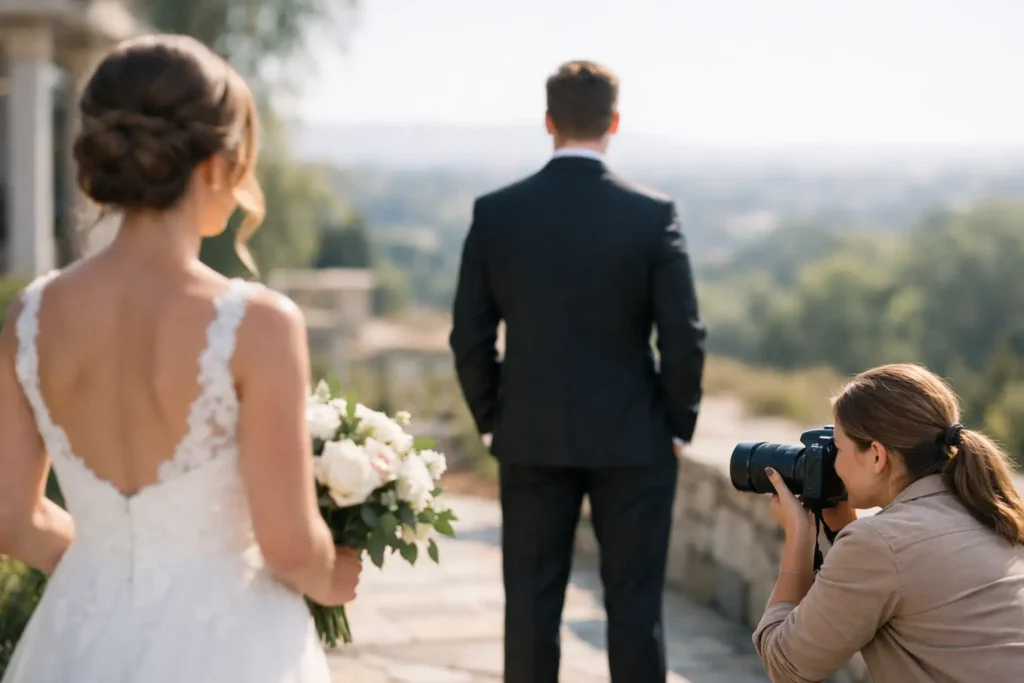
An experienced local photographer can often identify potential restrictions before they become a problem. They can advise whether a location is likely to be busy, whether a backup nearby would offer a similar feeling, and how to create meaningful photographs without bringing unnecessary equipment into a sensitive space.
For permit applications, you may need a short description of the shoot, your photographer’s professional details, and proof of insurance if requested. Requirements vary, so treat these as possibilities rather than universal rules. If an authority asks for documents in Portuguese, local support can make the exchange easier and more precise.
Photography permission is not the same as permission for every wedding activity. A ceremony setup, live musician, drone, vehicle access, or floral installation may require separate approval. When in doubt, list every element rather than assuming one yes covers the entire plan.
Drones deserve their own plan
Aerial images can add a cinematic sense of place, especially along the coast or among the vineyards. But drones are regulated independently from ground photography. Airspace restrictions, privacy considerations, proximity to people, weather, and site-specific rules all affect whether a flight is possible.
Never build a must-have moment around drone imagery alone. Consider it a wonderful addition when conditions and authorization allow, not a promise that should shape your entire schedule. The tenderness of a hand held during a walk, or the expression shared after your vows, will always carry more weight than a view from above.
Build Graceful Alternatives Into Your Day
The best permit strategy includes a Plan B that does not feel like a compromise. If access to a famous monument is restricted, a nearby street, garden, or architectural detail may offer a more intimate setting with fewer people around. If a beach requires a formal setup permit, you may choose a private villa ceremony and reserve the coast for a quiet sunset walk afterward.
This approach also protects you from weather, traffic, unexpected closures, and seasonal crowds. Portugal rewards flexibility. A misty Porto morning, a shaded Lisbon courtyard, or a wind-swept Algarve path can become part of the story rather than a logistical disappointment.
Leave breathing room between the ceremony and reception when portraits matter to you. Twenty calm minutes in a permitted, beautiful space will produce more honest photographs than an hour spent moving a large group through an uncertain location.
A Simple Permission Checklist
Before your wedding week, make sure you can answer these questions:
- Is photography included in the venue agreement, and are there any restricted areas or times?
- Does your chosen public, historic, or natural location require an application, fee, or reserved entry?
- Have you disclosed your guest count, ceremony details, and all equipment honestly?
- Do you have written confirmation and a contact person for the day?
- Is there a nearby alternative that feels just as aligned with your vision?
Respect Makes the Experience More Beautiful
Permits are not merely paperwork. They are part of caring for the places that make Portugal so memorable – its ancient stone, quiet chapels, lived-in streets, dramatic coastline, and family-run estates. Respecting a location’s rules also creates a calmer experience for you. There is no need to wonder whether a portrait session will be interrupted or whether a meaningful moment is happening somewhere you were not meant to be.
Choose spaces that welcome your celebration, allow time for the right approvals, and let your photography unfold naturally. When the setting feels secure and you feel at ease, the images have room to hold what matters most: the warmth, anticipation, and joy of beginning your life together.