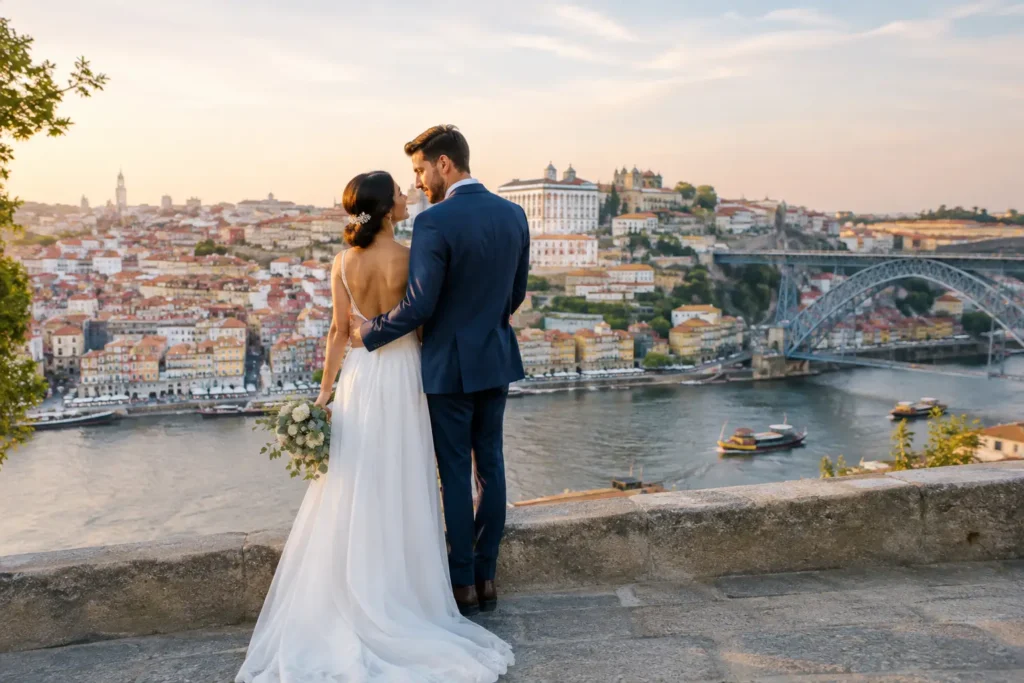
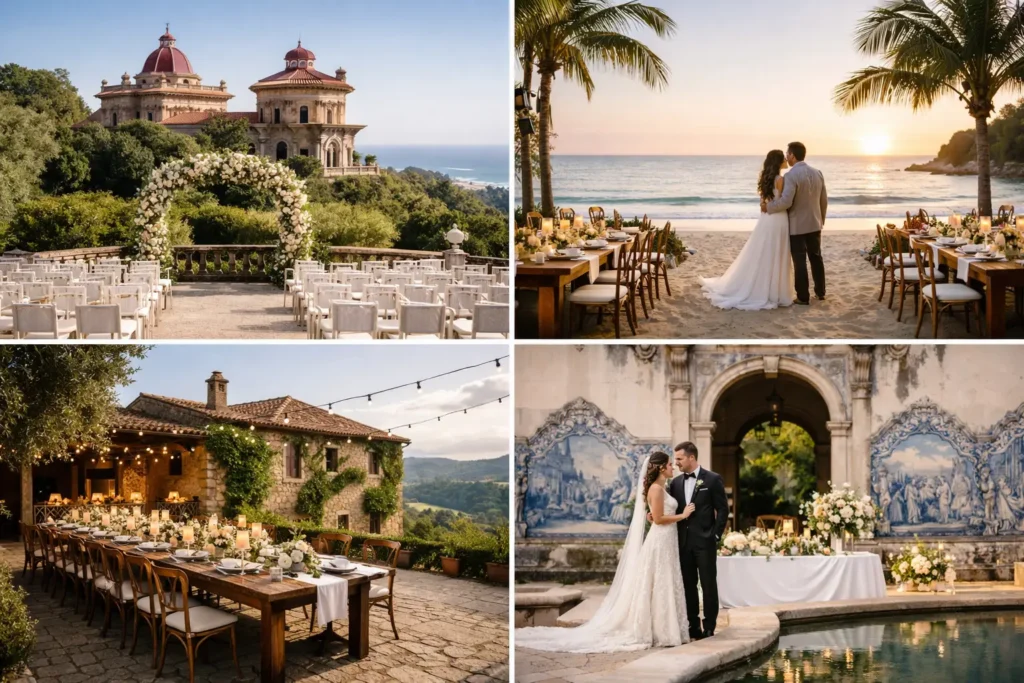
A wedding day moves quickly, even when it has taken months or years to plan. The best wedding albums give those fleeting hours a place to settle: the quiet anticipation before the ceremony, a parent’s expression during the vows, wind lifting a veil on a Lisbon rooftop, the laughter that carried late into the evening. More than a collection of beautiful photographs, an album is the story you can return to together.
For couples planning a celebration abroad, that physical connection matters even more. Your photographs may begin as a gallery shared across time zones, but a carefully made album brings the experience home. It becomes the piece you place on the coffee table, open on an anniversary, and one day share with the people who were not there.
What Makes the Best Wedding Albums Feel Timeless?
The most memorable wedding albums are not defined by the highest page count or the most elaborate cover. They are defined by feeling. A strong album design creates a rhythm that lets the day unfold naturally, giving meaningful images room to breathe instead of trying to include every frame.
Timelessness starts with the photography itself. Natural, emotionally honest photographs tend to remain compelling because they are rooted in real connection rather than short-lived trends. A close-up of hands finding each other before the ceremony can carry as much weight as a grand view of the Algarve coastline. Both belong in the story, but each needs the right amount of space.
Quality also matters in ways you can feel. Fine-art papers, true-to-life color, durable binding, and thoughtfully chosen cover materials help an album age beautifully. A wedding album should feel substantial when you hold it, while still inviting enough to open often.
There is a balance to strike. Heavily stylized designs, overly busy spreads, and dozens of nearly identical portraits can date an album or make it feel tiring to revisit. On the other hand, a design that is too minimal may leave out the small, personal moments that make the day unmistakably yours. The right approach is intentional rather than excessive.
Start With the Story, Not the Page Count
One of the most common questions couples ask is how many images a wedding album should include. There is no universal number because a two-hour elopement in Porto and a full weekend celebration in the Douro Valley ask for different stories.
Rather than starting with a target number of photographs, begin with the emotional arc of the day. Most wedding albums naturally move through anticipation, preparation, arrival, ceremony, celebration, and the intimate moments in between. This structure creates flow without making the album feel formal or predictable.
The opening pages can be quieter: a dress hanging in soft window light, handwritten vows, the landscape surrounding your venue, a loved one fastening a button. Then the energy builds. The ceremony deserves room for the wide scene and the close reactions. Later, the reception can feel more spontaneous, with movement, music, embraces, and the small details you may have missed in the moment.
A useful rule is to choose the photographs that make you feel something before choosing the ones that simply look impressive. The breathtaking landscape portrait may be essential, particularly for a destination wedding, but so might the imperfect photograph of your friends laughing during dinner. Albums gain their power from that combination of beauty and truth.
Give Important Moments Space
Not every page needs a collage. A single image across a full spread can create a pause that feels cinematic, especially for a wide ceremony view, a dramatic coastal portrait, or a first dance held in soft evening light.
Conversely, a sequence of smaller images can be perfect for movement and atmosphere: getting ready, guests arriving, a champagne toast, or an energetic dance floor. The goal is not to follow a strict design formula. It is to let each part of the day be remembered at its natural pace.
Choosing Album Paper, Printing, and Binding
The materials you select shape how your photographs are experienced. This is where premium albums distinguish themselves from a standard photo book.
Fine-art paper has a soft, tactile finish and a gentle, painterly quality. It is particularly lovely for weddings photographed with natural light, soft color, and an editorial sensibility. Photographic paper often offers richer contrast and a more luminous finish, which can suit vivid celebrations or images with deep shadows and bold evening light. Neither is automatically better. It depends on the visual character of your photographs and what you want to feel when you turn the pages.
Layflat binding is often worth choosing for a wedding album. It allows panoramic photographs to extend across two pages with little interruption at the center. This is especially effective for sweeping views of the Douro Valley, an architectural ceremony space, or a wide photograph of everyone gathered for the celebration.
For the cover, linen, leather, and suede-like materials each create a different impression. Linen feels refined and understated. Leather has a classic, heirloom quality. Softer fabric finishes can feel modern and intimate. Neutral tones tend to remain elegant over time, but a color with personal meaning can be equally beautiful if it belongs to your story.
Before deciding, ask to see and touch physical samples if possible. Digital images can show color, but they cannot show texture, weight, or the quiet satisfaction of a well-made binding.
How to Edit Your Photos Without Losing the Heart of the Day
Editing an album is often more emotional than couples expect. Every photograph can carry a memory, and leaving one out may feel like leaving something behind. The good news is that the album does not need to contain every meaningful image to preserve the meaning of the day.
Start by choosing your non-negotiables. These are usually the moments that immediately bring you back: seeing each other for the first time, walking into the ceremony, a grandparent’s hug, the vows, the first kiss, the toast that made everyone cry. From there, add the photographs that connect those moments.
Try not to select multiple versions of the same composition unless the sequence itself tells a story. One powerful portrait is usually stronger than five similar ones. Variety creates a more complete memory, so include close details, wide scenes, candid interactions, and images of the people who made the day feel like yours.
It can help to step away from the gallery before finalizing choices. Return a few days later and notice which images you still feel drawn to. Your instinct is often clearer once the immediate excitement has settled.
Include the People Who Hold Your History
Destination weddings are often intimate by design. That makes guest photographs especially valuable. The people who traveled to be with you are part of the story, whether they are sharing a quiet conversation at cocktail hour or dancing without restraint after dinner.
A beautiful album should still center the two of you, but it should not feel isolated from your community. Years from now, those candid images may become some of the most treasured pages.
Parent Albums and Smaller Keepsakes
A parent album is not merely a smaller duplicate of your own. It can be a meaningful way to honor the people who helped bring you to this moment. For parents, photographs of family reactions, the ceremony, and time spent together may matter as much as the portraits of the couple.
If you are creating smaller albums, consider adapting the edit rather than shrinking every spread. A concise version can still feel complete when it follows the emotional shape of the day. It may include fewer reception photographs or portraits, while preserving the moments that speak most directly to family.
This is also a thoughtful option for grandparents or loved ones who may not use an online gallery often. A printed album asks for no password, screen, or explanation. It simply offers the memory in their hands.
A Wedding Album Is Meant to Be Lived With
The best wedding albums are made with care, but they are not meant to live untouched in a box. Place yours somewhere you will see it. Open it after an ordinary dinner. Bring it out when friends visit. Let it gather the small signs of a life well lived.
Your wedding photographs deserve more than a brief moment on a screen. Chosen with intention and printed beautifully, they become a lasting way to remember not only how your wedding looked, but how it felt to be there together.