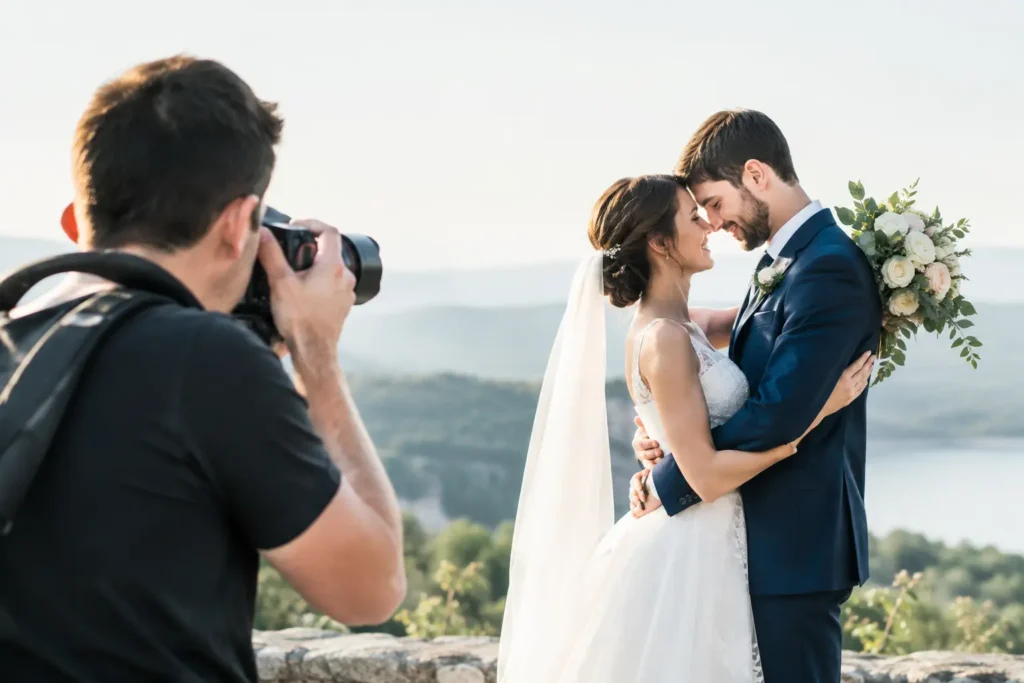
The photographs couples return to most are rarely the perfectly posed ones. They are the glance across the ceremony aisle, a parent’s hand finding yours before dinner, the laughter that arrives when your friends finally exhale. To get candid wedding photos, you do not need to perform for the camera. You need space to be present, a thoughtful plan, and a photographer who knows when to step forward and when to quietly let a moment breathe.
For a destination wedding in Portugal, that sense of ease matters even more. You may be balancing travel, unfamiliar surroundings, changing light, and a full day of people you love. The right approach protects the feeling of the celebration while preserving it with artistry.
Begin With Comfort, Not a Camera
Candid images begin well before the wedding day. Couples often worry that they are awkward in photographs, when what they actually dislike is being asked to hold unnatural poses for too long. A relaxed experience is built through trust: knowing what will happen, understanding that you will receive direction when it helps, and never feeling as if you must entertain the camera.
Share what matters to you while planning. Perhaps you care most about the emotional ceremony, your grandmother’s presence, the energy of a long dinner beneath the lights, or a quiet walk together after sunset. These priorities help shape coverage around the moments that deserve your attention.
It is equally useful to tell your photographer what makes you feel comfortable. Some couples want gentle prompts and a little reassurance during portraits. Others prefer to forget the camera is nearby. Neither preference is better. The goal is to create an experience that feels like you, rather than asking you to become more expressive, more polished, or more camera-ready than you naturally are.
Build a Wedding Timeline With Room for Real Life
A rushed timeline is one of the quickest ways to make a wedding feel staged. When every minute is assigned, there is little room for a hug that lasts longer than expected, a delayed toast, or the spontaneous laughter that often becomes a favorite photograph.
Give the important parts of the day more time than they seem to require. Getting ready is not only about the dress, suit, flowers, and final details. It is where anticipation gathers. Leave enough room for your closest people to be with you without being hurried out of the room.
The same applies to family photographs and couple portraits. A clear, efficient family-photo plan prevents loved ones from being called away repeatedly, leaving everyone free to enjoy cocktail hour. For portraits, twenty calm minutes can feel far more natural than an hour of constant instruction. When couples know they are not late for their own celebration, they settle into each other.
Plan for light, but do not chase perfection
Portugal offers remarkable light, from the soft Atlantic glow in Lisbon to the warm, layered hills of the Douro Valley. Scheduling portraits near sunset can bring a beautiful softness to the images, but it should not turn your wedding into a race against the clock.
If the ceremony runs late or the weather changes, a skilled photographer adapts. Often, the most meaningful frames happen in imperfect conditions: a veil caught by coastal wind, guests gathering closer during a brief shower, or a candlelit dinner after the sun has disappeared. Beautiful photographs are not dependent on a flawless schedule. They are made by noticing what is truly happening.
Choose Meaningful Moments Over Constant Coverage
Candid photography is not about taking photographs endlessly from every angle. It is about observing with intention. A photographer should understand the rhythm of a wedding well enough to anticipate emotion before it peaks: the breath before a first look, the hands reaching for tissues during speeches, the friend who is about to pull everyone onto the dance floor.
This is why experience matters. A quiet, observant presence makes it easier for people to act naturally, while thoughtful positioning ensures those unscripted moments are still beautifully composed. There is a balance to strike. You want to feel the warmth of your guests, not the constant awareness of being documented.
Talk through the traditions and relationships that matter most. If a sibling is giving a speech, if your parents helped make a detail by hand, or if you have friends traveling from different corners of the world, those stories deserve attention. The best candid photographs carry context. They do not just show a smile. They show who made that smile possible.
Let Portraits Feel Like Time Together
Natural wedding photography does not mean abandoning portraits. You will still want a few timeless images where you both look and feel your best. The difference is in the approach.
Rather than placing you in a series of rigid positions, your photographer can offer simple movement and connection. Walk slowly toward one another. Take a moment without speaking. Tell each other what you are feeling. Look at the view, then look back at the person you chose. These prompts create genuine reactions while giving the photographs an elegant sense of shape.
The location can help, too. A tiled courtyard in Porto, a quiet cliffside in the Algarve, or a vineyard path in the Douro Valley can offer visual beauty without demanding that you pose against it. Still, scenery should support the story, not overpower it. The most lasting image is usually not the one where the landscape is largest. It is the one where you look entirely at home with each other within it.
Forget the camera at the moments that matter most
During the ceremony, make a small promise to yourselves: look at each other. Listen to the words. Let your hands rest naturally. If tears come, let them come. The camera can take care of the rest.
The same is true during dinner and the dance floor. Resist the temptation to scan the room for your photographer after every meaningful moment. Be in the embrace. Laugh at the toast. Let your friends pull you into the music. A photographer who understands candid work will be watching for the emotion without asking you to interrupt it.
Help Your Guests Feel at Ease, Too
Your wedding photographs become more alive when guests are relaxed. Consider keeping formal instructions simple and welcoming. Let people know there will be time for hugs, conversation, and celebration, rather than turning every gathering into a photo call.
A thoughtful seating plan, an unhurried cocktail hour, and music that encourages people onto the dance floor all create opportunities for honest connection. If you are hosting a destination wedding, guests may also need a little time to settle into a new place and meet one another. That unplanned conversation over a glass of wine can become part of the visual story of the day.
There is one practical exception: group photographs. If you want them, make a concise list of essential combinations and appoint someone who knows the family to help gather people. This gives you the classic images you will value while keeping the rest of the celebration fluid.
Trust the Imperfect Moments
Not every candid photograph will be conventionally polished. Someone may blink. Your hair may move in the wind. A child may run through the edge of the frame. Yet these details often give wedding photographs their life.
The aim is not to create a day that looks effortless from the outside. It is to remember how it felt from within. That may include nervousness before the ceremony, joyful disorder on the dance floor, and the tenderness of seeing your favorite people in one place.
When you choose presence over perfection, you give your photographs something no pose can imitate: the unmistakable feeling of your real wedding day. Let the schedule support you, let the camera fade into the background, and leave room to be surprised by the moments you did not know you would want to remember.